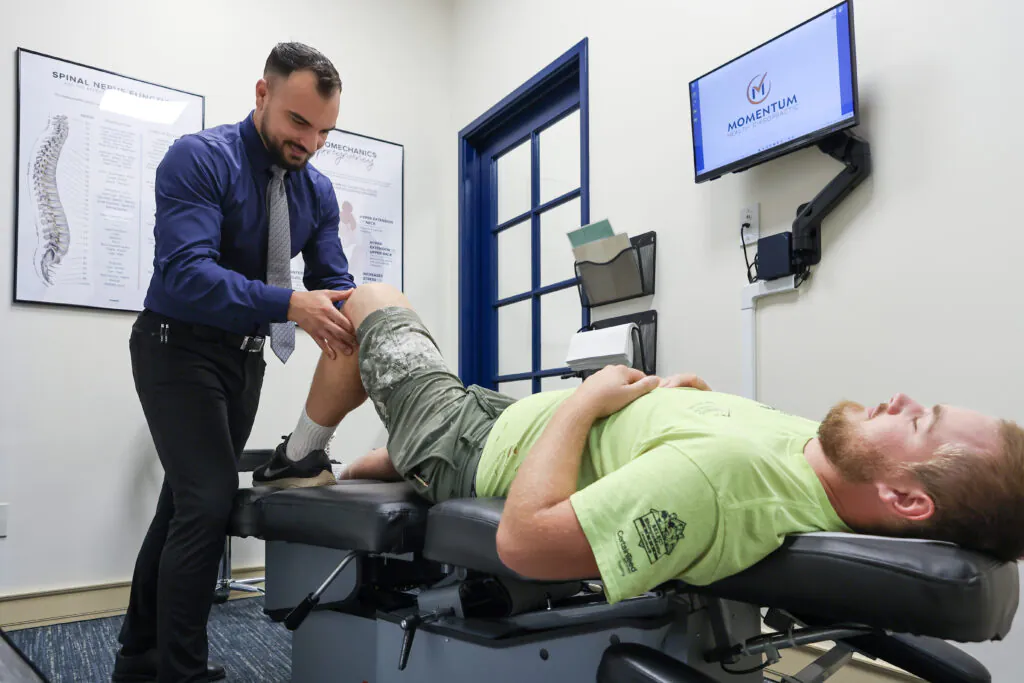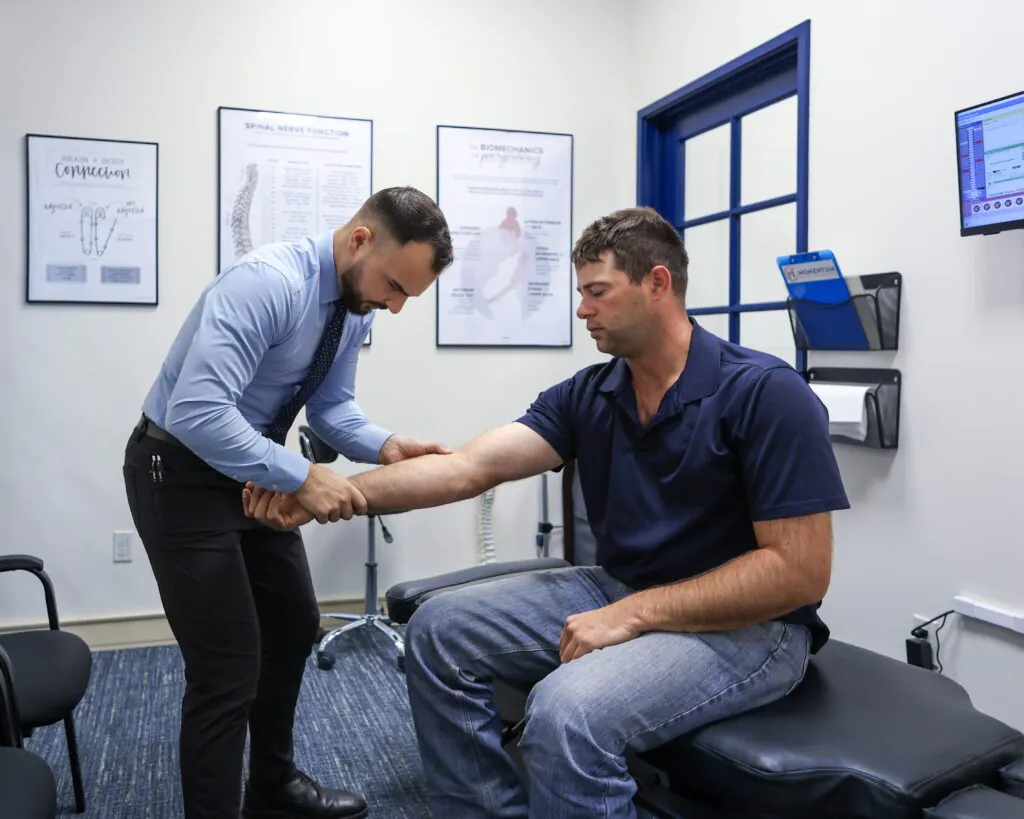


When you think about chiropractic care, back pain and neck stiffness probably come to mind first. But here in San Luis Obispo, we see patients every day at Momentum Health Chiropractic who are surprised to learn that their leg pain—sometimes severe and debilitating—has roots that go far beyond a simple pulled muscle. From radiating sciatic discomfort to mysterious throbbing that seems to come from nowhere, leg pain can dramatically affect your quality of life, making it difficult to walk, exercise, work, or even sleep comfortably. The good news? Many of these causes respond remarkably well to conservative, non-invasive chiropractic care. Understanding what’s really happening in your body is the first step toward finding lasting relief.
What Are the Surprising Causes of Leg Pain That Chiropractors Treat? Beyond obvious injuries, leg pain often stems from spinal misalignments, nerve compression, muscular imbalances, and biomechanical dysfunction in the pelvis or lower back. These issues can create referred pain, numbness, tingling, or weakness that travels down one or both legs, even when the source of the problem is located elsewhere in your body.
Table of Contents
- Cause #1: Sciatica from Lumbar Spine Dysfunction
- Cause #2: Piriformis Syndrome
- Cause #3: Sacroiliac Joint Dysfunction
- Cause #4: Spinal Stenosis
- Cause #5: Muscle Imbalances and Postural Distortions
- Cause #6: Referred Pain from Trigger Points
- Cause #7: Lower Extremity Joint Subluxations
- How Chiropractic Care Addresses Leg Pain
- Practical Self-Care Strategies for Leg Pain Relief
- When to See a Chiropractor for Leg Pain
- Understanding Your Symptoms: A Quick Reference
- Myths vs. Facts About Leg Pain and Chiropractic Care
- Final Thoughts from Momentum Health Chiropractic
Cause #1: Sciatica from Lumbar Spine Dysfunction
Sciatica is perhaps the most well-known cause of leg pain that brings patients through our doors at Momentum Health Chiropractic. This condition occurs when the sciatic nerve—the longest and thickest nerve in your body—becomes compressed or irritated, typically at the lower lumbar spine. The sciatic nerve runs from your lower back, through your buttocks, and down each leg, which is why problems at the spine can create symptoms that radiate all the way to your foot.
What surprises many San Luis Obispo residents is that sciatica isn’t actually a diagnosis itself, but rather a symptom of an underlying spinal problem. Common culprits include herniated discs, bulging discs, bone spurs, or degenerative disc disease. When the soft, gel-like center of a spinal disc pushes through its outer layer, it can press directly on the nerve root, triggering sharp, shooting pain down the back of the leg. Some patients describe it as an electric shock sensation, while others experience burning, numbness, or tingling.
The pain pattern is usually distinctive: it typically affects one leg more than the other and may worsen with prolonged sitting, standing, or certain movements like bending forward. Many people find temporary relief by lying down or walking, but the discomfort returns when they resume normal activities. Research published in the European Spine Journal indicates that conservative care, including chiropractic adjustments, has been shown to help many patients with sciatic symptoms avoid more invasive interventions.
Cause #2: Piriformis Syndrome
The piriformis muscle is a small but mighty structure located deep in your buttock region, running from your sacrum to the top of your thigh bone. Its primary job is to help rotate your hip and turn your leg outward. Here’s where things get interesting: the sciatic nerve typically runs underneath or sometimes directly through this muscle. When the piriformis becomes tight, inflamed, or goes into spasm, it can compress the sciatic nerve, creating symptoms that closely mimic true sciatica from spinal nerve compression.
Piriformis syndrome often develops gradually and is particularly common among people who sit for extended periods, runners, cyclists, and those who engage in activities requiring repetitive hip rotation. You might notice deep pain in your buttock that worsens when sitting, climbing stairs, or after prolonged sitting on hard surfaces. The discomfort may radiate down the back of your leg, though it rarely extends below the knee—a helpful distinguishing feature from lumbar-origin sciatica.
What makes this condition especially surprising is that the source of your leg pain is actually a muscle problem, not a spinal issue. Many patients come to Momentum Health Chiropractic in San Luis Obispo having tried various treatments without success, simply because the root cause wasn’t accurately identified. Chiropractors are trained to differentiate between various causes of sciatic-type symptoms through orthopedic testing, postural analysis, and functional movement assessments.
Cause #3: Sacroiliac Joint Dysfunction
The sacroiliac joints—commonly called SI joints—connect your sacrum (the triangular bone at the base of your spine) to your pelvis on both sides. These joints are critical for transferring weight and forces between your upper body and legs. They’re designed to move only slightly, providing stability while allowing just enough mobility for normal walking and movement. When these joints become misaligned, hypermobile, or restricted, they can generate significant pain that radiates into your lower back, buttocks, hips, and down your legs.
SI joint dysfunction is remarkably common but frequently misdiagnosed or overlooked entirely. The pain pattern can be confusing because it often mimics sciatica or hip problems. Patients typically describe a sharp or stabbing sensation on one side of their lower back or buttock, just off to the side of the spine. This discomfort may extend down the back or side of the thigh, sometimes reaching the knee but rarely going further. Activities that involve uneven weight distribution—like climbing stairs, getting in and out of cars, or standing on one leg—tend to aggravate the condition.
Several factors can contribute to SI joint problems, including pregnancy and childbirth, leg length discrepancies, previous injuries or trauma, arthritis, and repetitive stress from certain sports or occupations. Women are more susceptible due to hormonal factors and anatomical differences in pelvic structure. The good news is that chiropractic care specifically targeting the SI joint, combined with appropriate muscle work and stabilization exercises, has been shown to provide significant relief for many patients.
Cause #4: Spinal Stenosis
Spinal stenosis refers to a narrowing of the spaces within your spine, which can put pressure on the nerves traveling through the spine and down into your legs. While this condition is more common in adults over 50, we do see younger patients at our San Luis Obispo practice with congenital or acquired stenosis. The narrowing can occur in the central spinal canal or in the openings (foramina) where nerve roots exit the spine.
What makes spinal stenosis surprising as a cause of leg pain is its characteristic symptom pattern, known as neurogenic claudication. Unlike vascular claudication caused by poor circulation, neurogenic claudication typically presents as pain, weakness, numbness, or cramping in both legs that worsens with standing or walking and improves with sitting or bending forward. Many patients describe needing to lean on a shopping cart while walking through the store or finding relief when sitting down. This forward-flexed posture temporarily opens up the spinal canal, reducing pressure on the nerves.
The condition usually develops gradually over time as a result of age-related changes including disc degeneration, thickening of spinal ligaments, bone spurs, or arthritic changes in the facet joints. While severe stenosis may eventually require medical intervention, research indicates that conservative management including chiropractic care, specific exercises, and postural modifications can help many patients manage their symptoms effectively and maintain functional mobility.
Cause #5: Muscle Imbalances and Postural Distortions
Your body functions as an integrated kinetic chain, meaning that dysfunction in one area inevitably affects other regions. Muscle imbalances—where some muscles become overly tight and shortened while their opposing muscles become weak and lengthened—can create significant leg pain even without any obvious spinal or joint problem. This is particularly common in our modern lifestyle, which involves prolonged sitting, repetitive movements, and inadequate movement variety.
Consider the typical pattern we see at Momentum Health Chiropractic: someone sits at a desk for eight hours daily, their hip flexors become chronically shortened, their glutes weaken from disuse, and their hamstrings compensate by working overtime. This creates altered biomechanics throughout the lower body. The pelvis may tilt forward, the lumbar spine experiences excessive stress, and eventually, pain develops in the legs, often manifesting as hamstring tightness, knee discomfort, or generalized achiness that seems to have no clear origin.
Postural distortions work similarly. When your body develops compensatory patterns—perhaps from an old injury, repetitive occupational demands, or simply poor ergonomic habits—these distortions change how forces distribute through your skeletal system. Your body is remarkably adaptable and will find ways to function even with significant imbalances, but over time, these adaptations break down, leading to pain and dysfunction. The leg pain you’re experiencing may actually be your body’s way of signaling that the entire system needs recalibration.
Cause #6: Referred Pain from Trigger Points
Myofascial trigger points are hyperirritable spots within taut bands of muscle tissue that can refer pain to distant locations. This referred pain pattern is one of the most surprising and misunderstood causes of leg pain. A trigger point in your lower back, hip, or buttock can create intense discomfort down your leg without any actual problem existing in the leg itself. The brain interprets the nerve signals incorrectly, creating the perception of pain in an area far from the actual source.
Common trigger point patterns that affect the legs include those in the quadratus lumborum (deep lower back muscle) referring pain to the hip and thigh, gluteal trigger points creating sciatic-type symptoms, and tensor fasciae latae trigger points causing lateral thigh pain. These trigger points develop from various causes including acute muscle strain, chronic overuse, poor posture, emotional stress, nutritional deficiencies, or inadequate sleep. They’re perpetuated by continued stress on the affected muscles and lack of proper treatment.
What makes trigger point-related leg pain particularly frustrating for patients is that traditional imaging like X-rays or MRI scans won’t reveal them. You might undergo extensive testing only to be told that nothing is wrong, even though you’re experiencing real, significant pain. Chiropractors trained in trigger point evaluation and treatment can identify these problematic areas through palpation and patient history, then address them through specific manual therapy techniques, addressing underlying biomechanical issues, and providing guidance on preventing recurrence.
Cause #7: Lower Extremity Joint Subluxations
When we discuss subluxations in chiropractic, we’re referring to joint dysfunction characterized by misalignment, abnormal motion, or both. While spinal subluxations receive the most attention, subluxations in your lower extremity joints—including your hips, knees, ankles, and even feet—can be significant contributors to leg pain. These joint dysfunctions alter normal biomechanics, creating compensatory patterns that stress surrounding tissues and can lead to pain, inflammation, and reduced function.
Hip joint dysfunction is particularly impactful because the hip is a major weight-bearing joint with extensive range of motion demands. Restrictions or misalignments here can affect your entire gait pattern, leading to abnormal stress distribution throughout your leg. Similarly, ankle and foot subluxations—often developing after sprains that never fully healed properly—can change how your foot strikes the ground with each step. Over time, these altered mechanics work their way up through your body, potentially creating knee pain, hip discomfort, or even lower back and leg issues.
Many San Luis Obispo residents are surprised to learn that their chronic leg pain might be related to an old ankle sprain from years ago or subtle hip dysfunction they’ve been compensating for without realizing it. The human body is incredibly adaptive, but these adaptations eventually reach their limit. When that happens, pain and dysfunction emerge. Comprehensive chiropractic evaluation includes assessment of all relevant joints, not just the spine, ensuring that the true source of your leg pain is identified and addressed.
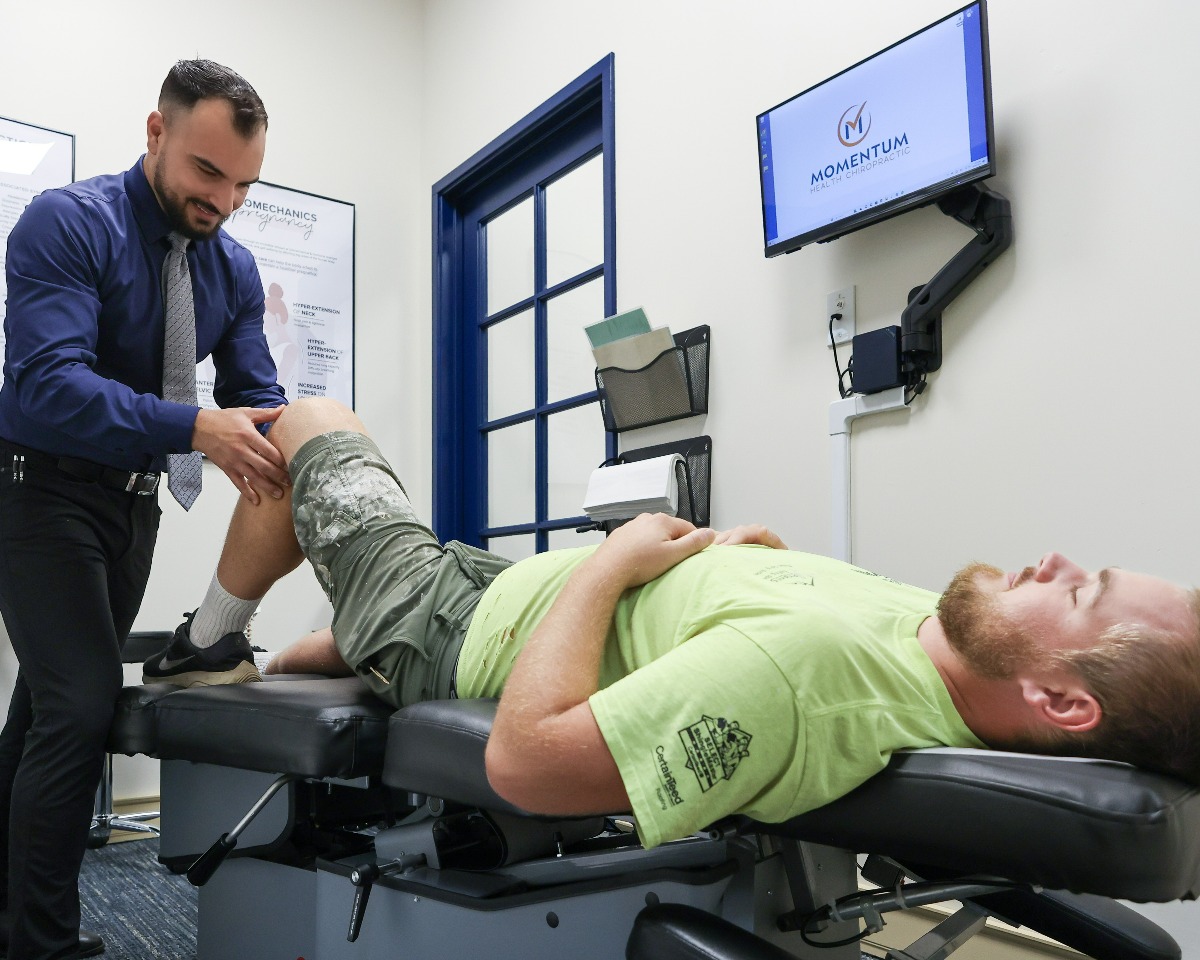
How Chiropractic Care Addresses Leg Pain
At Momentum Health Chiropractic, our approach to leg pain begins with thorough evaluation to determine the underlying cause. This includes detailed history-taking, orthopedic and neurological testing, postural and gait analysis, and sometimes diagnostic imaging when appropriate. Only after identifying the root cause can we develop an effective, individualized treatment plan. This comprehensive evaluation is essential because, as you’ve seen, leg pain can originate from numerous sources, each requiring specific interventions.
Chiropractic adjustments form the cornerstone of our conservative care approach. These precise, controlled applications of force to specific joints help restore proper alignment and motion, reduce nerve interference, and improve overall biomechanics. For spinal-origin leg pain like sciatica, adjustments target the lumbar spine to reduce nerve compression and irritation. For SI joint dysfunction, specific techniques address the sacroiliac joints. When lower extremity joint dysfunction contributes to your symptoms, extremity adjusting techniques restore proper function to hips, knees, ankles, or feet.
Beyond adjustments, we incorporate complementary therapies tailored to your specific condition. Soft tissue techniques address muscle tightness, trigger points, and fascial restrictions. Therapeutic exercises restore strength, flexibility, and proper movement patterns. We provide detailed guidance on ergonomic modifications, activity recommendations, and lifestyle factors that support healing and prevent recurrence. Evidence published in the Journal of Manipulative and Physiological Therapeutics indicates that multimodal chiropractic care—combining adjustments with complementary therapies—often produces superior outcomes compared to single-intervention approaches.
Throughout your care at our San Luis Obispo practice, we emphasize patient education and empowerment. Understanding what’s causing your leg pain, why certain treatments help, and how to prevent future problems gives you an active role in your recovery. This partnership approach has been shown to improve treatment outcomes and patient satisfaction while reducing the likelihood of chronic pain development.
Practical Self-Care Strategies for Leg Pain Relief
While professional chiropractic care addresses the underlying causes of your leg pain, several self-care strategies can support your recovery and potentially prevent future episodes. First, pay attention to your sitting posture and habits. If you work at a desk, ensure your workstation is ergonomically optimized with your feet flat on the floor, knees at roughly 90 degrees, and lumbar support for your lower back. Take regular movement breaks—standing up and walking for a few minutes every 30-45 minutes helps prevent muscles and joints from becoming stiff and compressed.
Incorporating gentle stretching into your daily routine can significantly impact leg pain, particularly when muscle tightness or imbalances contribute to your symptoms. Focus on hip flexor stretches if you sit frequently, hamstring and calf stretches for posterior chain tightness, and piriformis stretches if you experience buttock pain radiating down your leg. Hold stretches for 30 seconds without bouncing, breathing deeply throughout. Consistency matters more than intensity—gentle daily stretching produces better results than aggressive, sporadic efforts.
Movement variety is crucial for maintaining healthy biomechanics and preventing the repetitive stress patterns that contribute to many cases of leg pain. If your work or activities involve repetitive motions, consciously incorporate opposing movements throughout your day. Regular low-impact activities like walking, swimming, or cycling help maintain joint mobility, muscle balance, and cardiovascular health without excessive stress on compromised areas. Here in San Luis Obispo, taking advantage of our beautiful trails and outdoor spaces provides excellent opportunities for therapeutic movement.
Sleep position and mattress quality deserve attention as well. If you sleep on your side, placing a pillow between your knees helps maintain proper spinal and pelvic alignment. Back sleepers may benefit from a pillow under their knees to reduce lumbar stress. Your mattress should provide adequate support—too soft allows excessive sinking, while too firm can create pressure points. Finally, stay adequately hydrated and maintain balanced nutrition, as both factors influence tissue health, inflammation levels, and recovery capacity.
When to See a Chiropractor for Leg Pain
Knowing when to seek professional evaluation for leg pain can be challenging. As a general guideline, consider scheduling an appointment at Momentum Health Chiropractic if your leg pain persists for more than a few days despite rest and home care measures, progressively worsens over time, or significantly interferes with your daily activities, work, or sleep. Pain that radiates down your leg, especially if accompanied by numbness, tingling, or weakness, warrants professional assessment even if it’s not severe, as these symptoms suggest nerve involvement that benefits from early intervention.
Certain red flags indicate the need for urgent medical evaluation rather than (or before) chiropractic care. Seek immediate medical attention if you experience sudden onset of severe leg pain following trauma, leg pain accompanied by fever or unexplained weight loss, loss of bowel or bladder control, progressive weakness in one or both legs, or pain associated with a known infection or cancer diagnosis. These symptoms may indicate serious medical conditions requiring immediate medical intervention.
For most musculoskeletal causes of leg pain, however, conservative chiropractic care represents an appropriate first-line approach. Research published in guidelines from organizations including the American College of Physicians recommends non-pharmacological interventions like spinal manipulation for lower back pain and related conditions before progressing to medication or invasive procedures. Starting with conservative care not only avoids the risks associated with medications or surgery but also addresses the underlying biomechanical and neurological factors contributing to your symptoms.
Don’t wait until your leg pain becomes unbearable or severely limits your function. Early intervention typically leads to faster recovery, better outcomes, and prevention of chronic pain development. Many patients wish they’d sought care sooner rather than enduring months or years of discomfort. If you’re unsure whether chiropractic care is appropriate for your specific situation, our San Luis Obispo team is always happy to discuss your symptoms and determine the best course of action, including referral to other healthcare providers when appropriate.
Understanding Your Symptoms: A Quick Reference
| Condition | Typical Pain Location | Characteristic Features | Aggravating Factors |
|---|---|---|---|
| Lumbar Sciatica | Lower back through buttock, down back of leg to foot | Sharp, shooting, electric-like; usually one-sided; may include numbness/tingling | Prolonged sitting, bending forward, coughing/sneezing |
| Piriformis Syndrome | Deep buttock pain radiating down back of thigh | Rarely extends below knee; deep aching or burning sensation | Sitting, climbing stairs, hip rotation movements |
| SI Joint Dysfunction | Lower back, buttock, posterior or lateral thigh | Sharp or stabbing; one-sided; pain with weight transfer | Stairs, uneven surfaces, getting in/out of car, standing on one leg |
| Spinal Stenosis | Both legs, buttocks, lower back | Cramping, weakness, or numbness; relieved by sitting/forward bending | Walking, standing, backward bending |
| Trigger Points | Variable; often lateral thigh, hip, or diffuse leg pain | Referred pain pattern; may have tender spots when pressed | Stress, sustained postures, repetitive activities |
| Lower Extremity Subluxation | Localized to specific joint (hip, knee, ankle) with possible referral | Joint-specific pain; may have clicking, catching, or instability | Weight-bearing activities, specific movements depending on joint involved |
Myths vs. Facts About Leg Pain and Chiropractic Care
Myth: Leg Pain Always Means There’s a Problem in Your Leg
Fact: Many cases of leg pain originate from dysfunction in your spine, pelvis, or other areas distant from where you feel the discomfort. The nervous system’s complexity means that nerve compression or irritation in your lower back can create symptoms that manifest primarily in your leg, even when the leg structures themselves are perfectly healthy.
Myth: You Should Rest Completely When You Have Leg Pain
Fact: While avoiding activities that significantly worsen your pain is sensible, complete rest is rarely beneficial and may actually delay recovery. Gentle movement helps maintain circulation, prevents stiffness, and supports healing. The key is finding the right balance—staying active within your tolerance while avoiding movements that aggravate your condition. Your chiropractor can help you identify appropriate activities during recovery.
Myth: If Imaging Studies Are Normal, Your Leg Pain Isn’t Real
Fact: X-rays and MRI scans excel at identifying structural abnormalities but don’t capture functional problems like joint dysfunction, muscle imbalances, trigger points, or biomechanical issues—all of which can cause significant pain. Normal imaging simply means that certain structural pathologies have been ruled out, not that your pain isn’t genuine or doesn’t have a treatable cause.
Myth: Chiropractors Only Treat Back Pain, Not Leg Problems
Fact: Chiropractic education and training encompass the entire musculoskeletal system, not just the spine. Chiropractors are qualified to evaluate and treat conditions affecting extremities including legs, as well as address the spinal and pelvic dysfunctions that often underlie leg pain. Many chiropractors receive additional specialized training in extremity adjusting techniques and sports chiropractic.
Myth: Once Your Leg Pain Goes Away, You’re Cured and Don’t Need Further Care
Fact: While pain relief is certainly an important goal, addressing underlying biomechanical dysfunction, restoring proper movement patterns, and implementing preventive strategies helps reduce recurrence risk. Many patients benefit from periodic maintenance care to address minor issues before they develop into significant problems, much like regular dental checkups prevent major tooth problems.
Final Thoughts from Momentum Health Chiropractic
Leg pain can feel overwhelming and confusing, especially when the cause isn’t immediately obvious. Here in San Luis Obispo, we understand how debilitating this condition can be—whether it’s keeping you from enjoying our beautiful hiking trails, affecting your work performance, or simply making everyday activities uncomfortable. The encouraging news is that many of the surprising causes of leg pain we’ve discussed respond well to conservative, drug-free chiropractic care focused on identifying and addressing root causes rather than merely masking symptoms.
At Momentum Health Chiropractic, we’re committed to helping our community members understand their bodies, recover from pain, and maintain optimal function throughout their lives. If you’re experiencing leg pain that’s affecting your quality of life, we encourage you to schedule an evaluation so we can determine what’s actually causing your symptoms and develop a personalized treatment plan to get you back to the activities you love. Your legs carry you through life—they deserve the care and attention necessary to keep them functioning properly.
Frequently Asked Questions
Can chiropractic care help leg pain even if my X-rays show arthritis?
Yes, chiropractic care can often help manage leg pain associated with arthritis. While we cannot reverse arthritic changes, we can improve joint mechanics, reduce inflammation, and address compensatory patterns that may be contributing to your discomfort. Many patients with arthritis find that regular chiropractic care helps them maintain better function and experience less pain.
How long does it typically take to see improvement in leg pain with chiropractic treatment?
Response time varies significantly depending on the underlying cause, severity, duration of symptoms, and individual factors. Some patients notice improvement after just a few visits, while more chronic or complex conditions may require several weeks of consistent care. During your initial evaluation, we can provide a more specific timeline based on your particular situation.
Is it normal to have leg pain on one side only?
Yes, unilateral leg pain is quite common, particularly with conditions like sciatica from disc herniation, SI joint dysfunction, or piriformis syndrome. However, bilateral leg pain can also occur, especially with spinal stenosis or certain systemic conditions. The pain pattern provides important diagnostic clues about the underlying cause.
Can poor footwear cause the kind of leg pain you’ve described?
Absolutely. Inadequate footwear support can contribute to biomechanical problems that work their way up through your ankles, knees, hips, pelvis, and spine. Over time, this can lead to various types of leg pain. We often recommend proper footwear as part of a comprehensive treatment approach, especially for patients whose work or activities involve prolonged standing or walking.
Should I be concerned if my leg pain comes and goes rather than being constant?
Intermittent leg pain is actually quite common and doesn’t necessarily indicate a less serious problem. Many musculoskeletal conditions cause symptoms that fluctuate based on activity level, posture, stress, and other factors. However, worsening frequency or intensity of episodes warrants professional evaluation to address the underlying cause before it becomes more problematic.
Will I need ongoing chiropractic care for leg pain, or is it just temporary treatment?
Treatment duration depends on your specific condition and goals. Many patients achieve significant improvement with an initial series of visits focused on resolving acute symptoms and addressing underlying dysfunction. Some choose to continue with periodic maintenance care to prevent recurrence, while others only return if symptoms resurface. We’ll work with you to develop a care plan that aligns with your needs and preferences.
TL;DR – Key Takeaways
- Leg pain often originates from spinal, pelvic, or muscular dysfunction rather than problems in the leg itself, making proper diagnosis crucial for effective treatment.
- Seven surprising causes include lumbar sciatica, piriformis syndrome, SI joint dysfunction, spinal stenosis, muscle imbalances, trigger points, and lower extremity joint subluxations—all of which respond to chiropractic care.
- Comprehensive chiropractic evaluation identifies the root cause of your leg pain, allowing for targeted treatment through adjustments, soft tissue work, exercises, and lifestyle modifications.
- Self-care strategies like proper ergonomics, regular movement breaks, appropriate stretching, and sleep positioning support recovery and prevention.
- Seek chiropractic evaluation if leg pain persists beyond a few days, worsens progressively, radiates from your back or buttock, or significantly affects your daily function—early intervention typically leads to better outcomes.