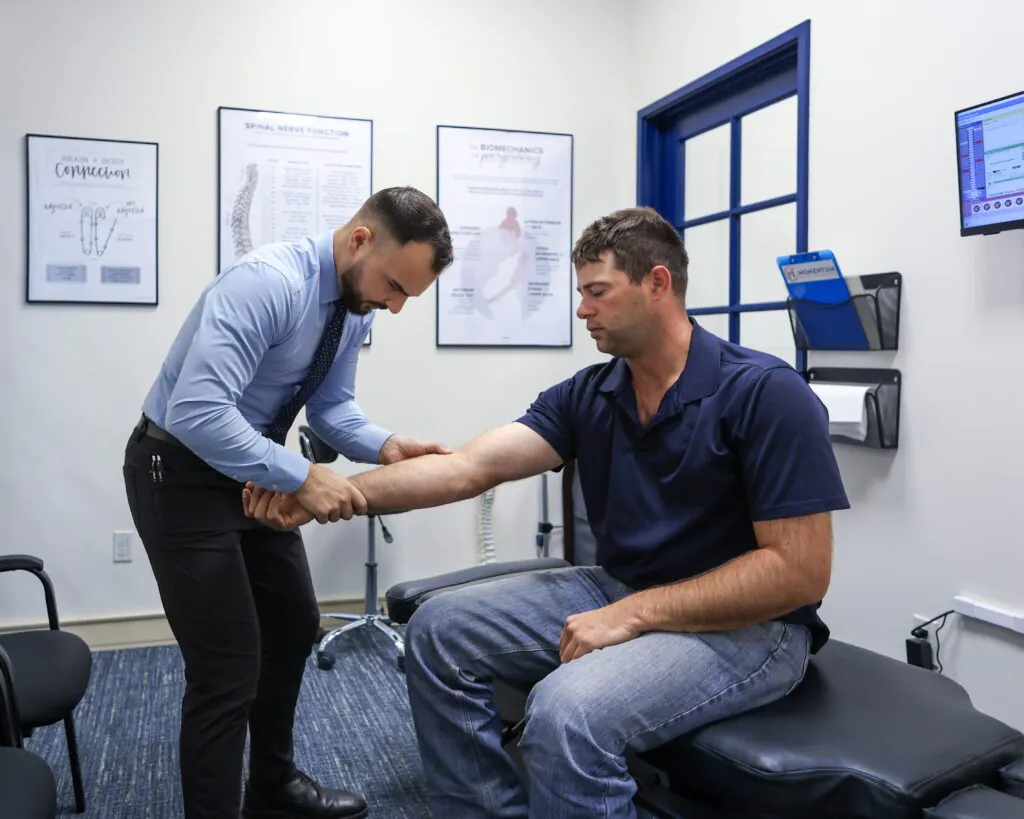

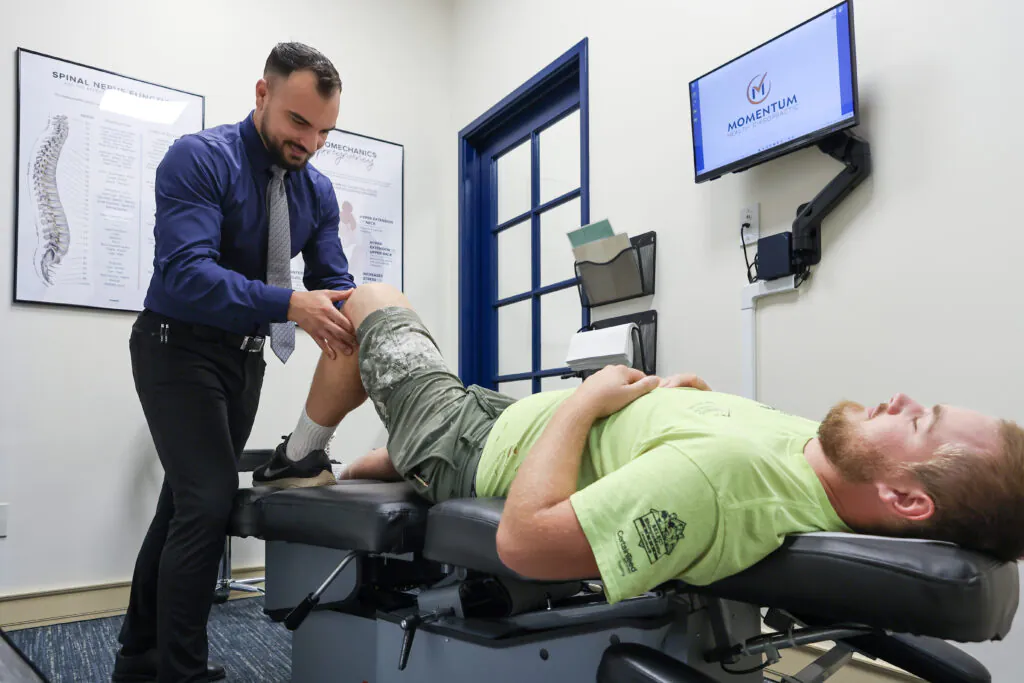
Knee pain is one of those things people tend to brush off — especially if it comes and goes or seems manageable with a bit of rest. But here in San Luis Obispo, many of our patients at Momentum Health Chiropractic come in after weeks or even months of ignoring discomfort that gradually became impossible to overlook. The truth is, not all knee pain is created equal. Some of it is minor and resolves on its own. Some of it is your body waving a red flag, asking for attention before a small problem becomes a much bigger one. In this article, Dr. David Sedghi walks you through seven signs that your knee pain may be more than just a passing ache — and what you can do about it.
What does it mean when knee pain “shouldn’t be ignored”?
Knee pain that shouldn’t be ignored refers to symptoms that suggest underlying structural, inflammatory, or neurological issues — not just ordinary muscle soreness. These are warning signs that the knee joint, surrounding soft tissue, or supporting structures may need professional evaluation to prevent worsening damage or long-term dysfunction.
- Swelling That Won’t Go Away
- Sharp, Catching, or Locking Sensations
- Pain That Worsens With Everyday Activities
- Instability or Buckling in the Knee
- How Chiropractic Care Can Help Knee Pain
- Practical Tips for Supporting Knee Health
- When to See a Chiropractor for Knee Pain
Sign #1: Swelling That Won’t Go Away
A little puffiness after a long hike or an intense workout isn’t unusual. But when swelling around the knee lingers for more than a few days — or comes back repeatedly without a clear cause — that’s a sign worth paying attention to. Persistent swelling often indicates that something inside the joint is irritated, inflamed, or injured.
The knee can swell in response to a variety of issues, including damage to the meniscus (the cartilage cushions inside the joint), ligament sprains, bursitis, or the early stages of osteoarthritis. Fluid accumulation in the joint is your body’s way of trying to protect the area — but it also signals that something isn’t right mechanically or structurally.
If you notice that your knee looks visibly larger than normal, feels warm to the touch, or is consistently puffy when you wake up in the morning, it’s time to have it evaluated. Dr. David Sedghi and the team at Momentum Health Chiropractic in San Luis Obispo can help assess whether the swelling is related to biomechanical dysfunction or if it requires additional diagnostic workup.
Sign #2: Sharp, Catching, or Locking Sensations
Most people are familiar with dull, achy knee pain. But sharp, stabbing sensations — especially those that occur during specific movements like going up stairs, squatting, or pivoting — suggest something more targeted is going on. These types of pain often point to structural issues rather than general muscle fatigue.
One particularly telling symptom is a “catching” or “locking” sensation, where the knee seems to briefly get stuck mid-movement before releasing. This phenomenon can be associated with a torn or displaced piece of cartilage, a loose body within the joint, or damage to the meniscus. It’s not something to work through or stretch out — it often requires professional assessment to determine the source.
Clicking or popping sounds that are accompanied by pain (as opposed to painless clicking, which is often harmless) also fall into this category. If your knee is making noise and it hurts, that combination deserves a closer look from a qualified clinician.
Sign #3: Pain That Worsens With Everyday Activities
There’s a meaningful difference between knee discomfort during intense physical activity and knee pain that shows up when you’re doing ordinary things — walking around the block, climbing a single flight of stairs, or simply standing from a chair. When knee pain starts interfering with your daily routine, it’s no longer a minor inconvenience. It’s a functional limitation.
Pain with routine movement often indicates that the knee’s supporting structures — including the surrounding muscles, tendons, ligaments, and joint surfaces — are under more stress than they should be. This can stem from alignment issues in the hips or pelvis, poor foot mechanics, or weakness in the muscles that stabilize the knee. Chiropractic care addresses these upstream and downstream contributors that most people overlook entirely.
Here in San Luis Obispo, many of our active patients at Momentum Health Chiropractic assume their pain is just “part of getting older.” That’s rarely the full story. Pain that limits everyday function often has identifiable, addressable causes — and the sooner they’re identified, the better the outcomes tend to be.
Sign #4: Instability or Buckling in the Knee
If your knee has ever buckled unexpectedly — giving way beneath you while walking, stepping off a curb, or changing direction — that experience can be as alarming as it is physically dangerous. Knee instability is a sign that the structures responsible for holding the joint together may be compromised.
The ligaments of the knee, including the ACL, PCL, MCL, and LCL, play a critical role in keeping the joint stable during movement. When any of these are strained, partially torn, or fully ruptured, the knee loses its mechanical integrity. Muscle weakness around the joint — particularly in the quadriceps and hip stabilizers — can also contribute to a buckling sensation even without ligament damage.
Instability isn’t just uncomfortable — it’s a fall risk. And for our San Luis Obispo community members who love outdoor activities like hiking, cycling, or running, an unstable knee can derail your lifestyle quickly. Dr. David Sedghi takes a whole-body approach to evaluating knee instability, looking at how the hips, pelvis, and lumbar spine may be contributing to the problem.
Signs #5, #6, and #7: Additional Warning Signs Not to Overlook
Sign #5: Pain That Doesn’t Improve With Rest
One common assumption about knee pain is that resting it will fix it. And for many minor strains or overuse injuries, rest is genuinely helpful. But if you’ve taken several days off from physical activity, avoided anything that aggravates the knee, and the pain simply hasn’t improved — or has gotten worse — that’s a meaningful signal.
Pain that persists at rest, especially if it’s present while lying down or wakes you up at night, may suggest inflammation that isn’t simply mechanical in origin. Conditions like inflammatory arthritis or joint degeneration can cause pain that rest alone won’t resolve. This type of persistent discomfort deserves professional evaluation rather than continued waiting.
Sign #6: Visible Changes in Knee Alignment or Shape
If you notice that one knee appears to be sitting differently than the other — looking more bowed, knocked inward, or misaligned compared to how it normally looks — pay attention. Visible asymmetry in the knee can result from swelling, muscle imbalance, or structural changes in the joint itself.
Changes in the way the knee tracks during movement — where the kneecap (patella) appears to shift off-center — can also cause pain and accelerate wear on the joint surfaces. This is sometimes called patellofemoral dysfunction and is something chiropractic care, combined with targeted rehabilitation exercises, can meaningfully address. At Momentum Health Chiropractic, Dr. David Sedghi assesses patellar tracking as part of a comprehensive knee evaluation.
Sign #7: Knee Pain Accompanied by Numbness, Tingling, or Radiating Symptoms
Knee pain that travels — either down into the lower leg and foot, or up into the hip and low back — isn’t purely a knee problem. Radiating sensations, including numbness, tingling, or a burning feeling, suggest that nerve involvement may be at play. This can originate from the lumbar spine, where nerve roots can become compressed and refer symptoms into the leg.
Conditions like sciatica or lumbar disc involvement can produce symptoms that feel like knee pain but are actually rooted in spinal dysfunction. This is one of the reasons a chiropractic evaluation can be so valuable — Dr. David Sedghi is trained to differentiate between a local knee issue and a referred pain pattern coming from elsewhere in the body.
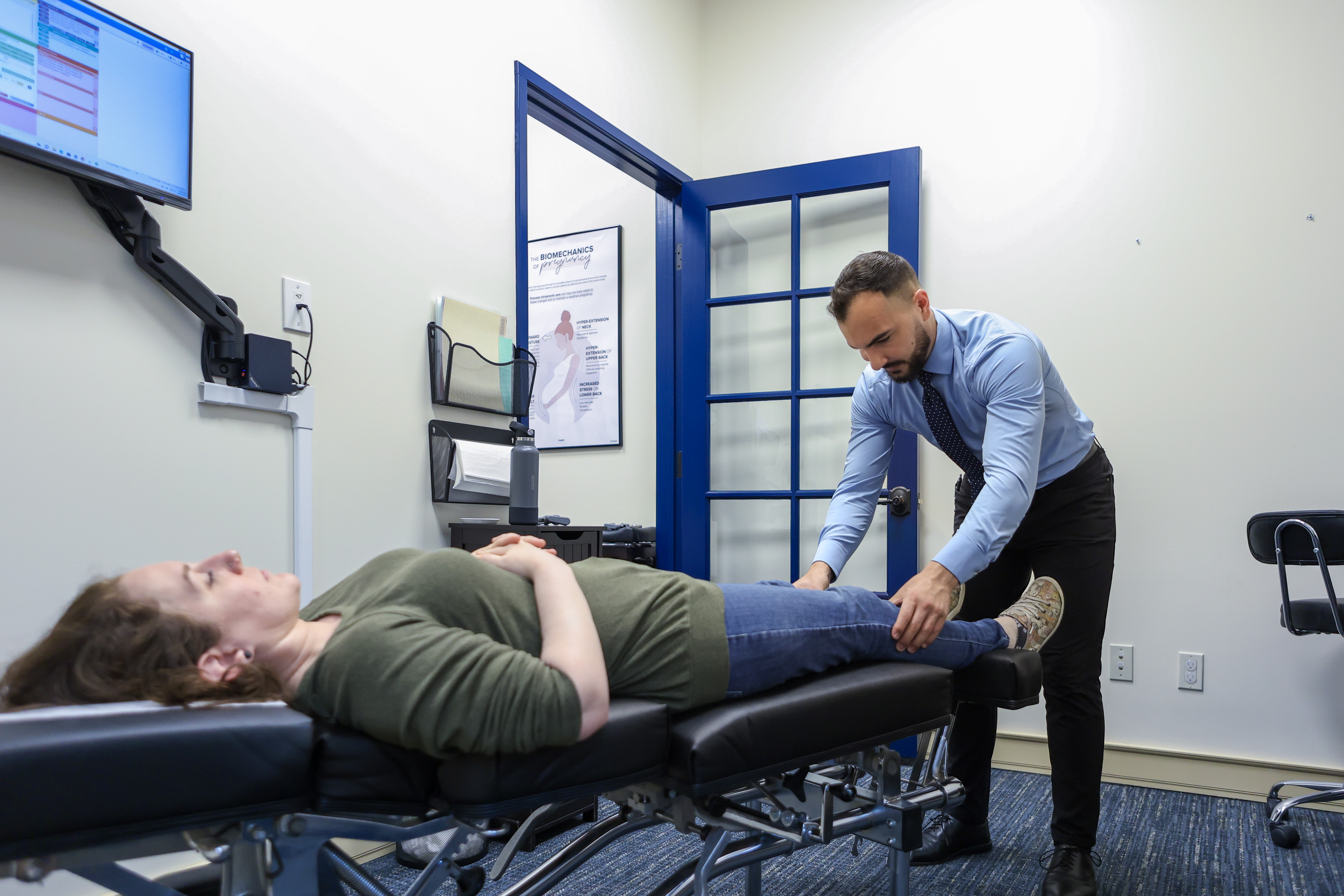
How Chiropractic Care Can Help Knee Pain
Chiropractic care takes a non-invasive, drug-free approach to musculoskeletal problems — including knee pain. Rather than masking symptoms with medication, the goal is to identify and address the underlying mechanical contributors to pain and dysfunction. At Momentum Health Chiropractic in San Luis Obispo, this process begins with a thorough evaluation of not just the knee, but also the hips, pelvis, lumbar spine, and foot mechanics.
Spinal and extremity adjustments can help restore proper joint motion, reduce neurological interference, and support the body’s natural healing process. Research published in peer-reviewed journals, including sources referenced by organizations like the American Chiropractic Association, suggests that conservative care — including manual therapy — can be effective in managing musculoskeletal knee conditions. Care is always individualized, and Dr. David Sedghi collaborates with other healthcare providers when imaging or additional evaluation is warranted.
Beyond adjustments, chiropractic care at Momentum Health Chiropractic often incorporates soft tissue techniques, corrective exercise guidance, and ergonomic recommendations to help patients regain function and prevent future flare-ups. The goal is always long-term improvement — not just short-term relief.
Practical Tips for Supporting Knee Health
While professional care is important when warning signs are present, there are also sensible habits you can build into your daily life to support knee health between visits. These aren’t substitutes for evaluation — they’re complementary habits that reinforce your care plan.
Maintaining strong hip and glute muscles is one of the most effective things you can do for your knees. The hips play a critical role in controlling how load is distributed through the knee joint. When the hip stabilizers are weak, the knee compensates — and over time, that compensation leads to wear, pain, and injury. Simple glute-strengthening exercises like bridges or clamshells can make a real difference when done consistently.
Footwear matters more than most people realize. Worn-out shoes, high heels worn daily, or footwear without adequate support can alter the mechanics of your entire lower limb — all the way up to the knee and hip. If you’re in San Luis Obispo and spend a lot of time on your feet, it’s worth having your gait evaluated to see if your footwear choices may be contributing to your symptoms.
Finally, staying hydrated and maintaining a healthy body weight both support joint health over the long term. Excess body weight increases compressive forces through the knee joint during everyday movement. Small, sustainable changes in this area can significantly reduce the load your knees carry each day.
When to See a Chiropractor for Knee Pain
If you’re experiencing any of the seven signs described in this article — persistent swelling, sharp or locking sensations, pain with daily activity, instability, pain that won’t improve with rest, visible alignment changes, or radiating symptoms — it’s appropriate to schedule a professional evaluation sooner rather than later. Waiting tends to allow compensatory patterns to develop, which can complicate recovery.
Chiropractic care is particularly well-suited for knee pain related to alignment issues, muscle imbalance, overuse, and biomechanical dysfunction. However, there are red flags that indicate the need for immediate emergency care. These include: severe trauma to the knee, significant deformity after an injury, inability to bear any weight at all, or signs of infection such as extreme heat, redness, and fever. In those cases, please seek emergency medical attention right away.
For everything in between — including the persistent, nagging, limiting knee pain that so many people put up with unnecessarily — chiropractic evaluation is a sensible, conservative first step.
Knee Pain Warning Signs at a Glance
| Warning Sign | What It May Indicate | Appropriate Response |
|---|---|---|
| Persistent swelling (3+ days) | Inflammation, meniscus damage, bursitis, or early arthritis | Schedule a professional evaluation |
| Locking or catching sensation | Cartilage damage or loose body in the joint | Chiropractic or orthopedic evaluation |
| Pain with routine daily activities | Biomechanical dysfunction, alignment issues, muscle weakness | Chiropractic evaluation and care |
| Buckling or instability | Ligament compromise or significant muscle weakness | Professional evaluation; possible imaging |
| Pain at rest or at night | Inflammatory condition or joint degeneration | Evaluation to rule out systemic causes |
| Visible misalignment or asymmetry | Patellofemoral dysfunction or structural change | Biomechanical assessment and care |
| Numbness, tingling, or radiating pain | Nerve involvement, possible spinal origin | Chiropractic spinal and extremity evaluation |
Myths vs. Facts About Knee Pain
Myth: Knee pain is just a normal part of aging and there’s nothing you can do about it.
Fact: While wear and tear on joints does increase with age, knee pain is not inevitable or untreatable. Many people in their 50s, 60s, and beyond experience significant improvement in knee pain through chiropractic care, targeted exercise, and lifestyle modifications. Age alone doesn’t mean you have to live with pain.
Myth: If you can still walk on it, your knee is fine.
Fact: Many significant knee injuries — including meniscus tears and partial ligament injuries — allow a person to continue walking with discomfort. The ability to bear weight does not rule out a meaningful structural problem. Persistent or worsening pain warrants evaluation regardless of how functional you feel.
Myth: Rest is always the best treatment for knee pain.
Fact: Rest is appropriate in the acute phase of an injury, but prolonged rest without addressing the underlying cause can lead to muscle weakness, stiffness, and worsening pain over time. Evidence-based care typically involves a combination of movement, hands-on therapy, and rehabilitation — not extended inactivity.
Myth: Chiropractic care is only for the spine — it can’t help the knee.
Fact: Chiropractors are trained to evaluate and treat extremity joints, including the knee, hip, shoulder, and ankle. Many knee problems are directly connected to dysfunction in the pelvis, lumbar spine, or foot mechanics — areas that fall squarely within the scope of chiropractic care.
Myth: You need an MRI or X-ray before seeing a chiropractor.
Fact: Imaging is helpful in many cases but is not always required before beginning a chiropractic evaluation. Dr. David Sedghi will determine during your intake whether imaging is necessary and can refer you for the appropriate studies if needed. Many conditions can be meaningfully assessed through a thorough physical and orthopedic examination.
Final Thoughts From Momentum Health Chiropractic in San Luis Obispo
Knee pain has a way of quietly shrinking your world. Activities you love — hiking the trails around San Luis Obispo, playing with your kids or grandkids, or simply enjoying an evening walk — start to feel like things you “used to do.” It doesn’t have to be that way. Understanding the warning signs is the first step toward getting the right help at the right time.
At Momentum Health Chiropractic, our goal is to help the San Luis Obispo community move better, feel better, and live fully — without relying on medications or surgery as a first resort. Dr. David Sedghi brings a thorough, whole-body perspective to every patient who walks through our doors, and we take the time to actually understand what’s going on before recommending a path forward.
If you’ve recognized any of the seven signs in this article, we warmly encourage you to reach out and schedule an evaluation. You don’t have to keep wondering whether your knee pain is serious. Let’s find out together — and put you back on the path to feeling like yourself again.
Frequently Asked Questions About Knee Pain
Can a chiropractor treat knee pain, or should I see an orthopedic doctor?
Chiropractors are well-equipped to evaluate and treat many common causes of knee pain, particularly those related to biomechanical dysfunction, alignment, and soft tissue issues. For severe injuries or cases where surgery may be indicated, a chiropractor will refer you to the appropriate specialist. In many cases, starting with conservative chiropractic care is a sensible first step before pursuing more invasive options.
How long does knee pain typically take to improve with chiropractic care?
Recovery timelines vary significantly depending on the severity and underlying cause of the knee pain. Some patients notice meaningful improvement within a few visits, while others with more complex or longstanding issues may require several weeks of consistent care. Dr. David Sedghi will give you a realistic assessment of your expected progress after your initial evaluation.
Is it safe to exercise with knee pain?
This depends entirely on the nature and severity of the pain. Gentle movement is often encouraged, but certain exercises can aggravate underlying conditions if performed incorrectly. It’s best to get a professional evaluation before continuing or modifying an exercise routine when knee pain is present.
What causes knee pain to come and go?
Intermittent knee pain is often related to activity levels, inflammation cycles, or mechanical issues that are aggravated under certain conditions and improve with rest. While it may seem reassuring when the pain goes away, recurring knee pain that keeps returning is still worth having evaluated — it often indicates an unresolved underlying issue.
Can poor posture or spinal problems really cause knee pain?
Yes — the spine, pelvis, and lower extremities function as an interconnected system. Dysfunction in the lumbar spine or pelvis can alter gait mechanics and load distribution, placing increased stress on the knee joint over time. This is one of the key reasons Dr. David Sedghi evaluates the entire kinetic chain, not just the knee itself.
Do I need imaging before my first chiropractic appointment for knee pain?
Imaging is not always necessary before your first visit. During your initial evaluation at Momentum Health Chiropractic in San Luis Obispo, our team will assess whether X-rays or additional diagnostic studies are warranted based on your symptoms, history, and examination findings.
TL;DR — Key Takeaways
- Knee pain that involves swelling, instability, locking sensations, radiating symptoms, or pain during daily activities should be professionally evaluated — not ignored.
- Chiropractic care takes a whole-body approach to knee pain, addressing not just the knee but also the hips, pelvis, spine, and foot mechanics that influence it.
- Not all knee pain is the same — some warning signs indicate structural issues that won’t resolve on their own with rest alone.
- Dr. David Sedghi and the team at Momentum Health Chiropractic in San Luis Obispo offer conservative, non-invasive evaluation and care for patients dealing with knee pain.
- Knowing the warning signs early gives you the best chance at a faster, more complete recovery — and helps protect your long-term joint health.