
If you’ve ever caught yourself hunched over your phone or slouching at your desk, you’re not alone. Poor posture is one of the most common complaints we hear about here in San Luis Obispo — and it’s contributing to a surprising amount of neck pain, back pain, headaches, and fatigue that people just accept as part of daily life. The good news? Maintaining proper posture is something you can actively improve, and the benefits go far beyond just “standing up straight.” At Momentum Health Chiropractic, we help patients understand how posture affects the entire body — and what they can do to take control of it.
What Is Proper Posture?
Proper posture refers to the alignment of your body’s structures — your bones, joints, and muscles — in a way that places the least amount of strain on supporting muscles and ligaments during movement or rest. In simple terms, it’s the position your body is designed to be in. Good posture allows your spine to maintain its natural curves and your muscles to work efficiently without unnecessary tension or overloading.
Why Posture Matters More Than You Think
Most people think of posture as a cosmetic issue — something your parents nagged you about at the dinner table. But the truth is, maintaining proper posture has a profound impact on your overall health and how you feel every single day. Your spine is the central highway for your nervous system. When it’s misaligned or under constant strain, it can affect everything from your breathing and digestion to your mood and energy levels.
The spine has three natural curves: a forward curve at the neck (cervical lordosis), a backward curve at the mid-back (thoracic kyphosis), and a forward curve at the lower back (lumbar lordosis). These curves work together like a spring, absorbing shock and distributing load across your body. When posture deteriorates, these curves can shift — and the ripple effect throughout your muscles, joints, and nerves can be significant.
Research published through sources like the National Institutes of Health (NIH) and the American Chiropractic Association (ACA) suggests that chronic poor posture is associated with increased musculoskeletal pain, reduced lung capacity, and even decreased quality of life. Here in San Luis Obispo, where many of our patients lead active lifestyles — hiking, cycling, surfing — proper spinal alignment is critical for both everyday performance and injury prevention.
Beyond the physical effects, there is growing evidence that posture can influence confidence, stress levels, and how we breathe. When your chest is open and your spine is aligned, your diaphragm has room to expand fully. When you’re hunched forward, you’re literally compressing your breathing mechanics. That’s a compelling reason to start paying attention to how you carry yourself every day.

Common Causes of Poor Posture
Poor posture rarely develops overnight. It’s usually the result of repeated habits, environmental factors, and sometimes structural imbalances that build up gradually over time. Understanding the root causes is the first step toward lasting improvement.
One of the biggest culprits in today’s world is technology use. Whether it’s leaning forward toward a computer screen, tilting your head down toward a smartphone, or sitting for hours in a chair that doesn’t support your spine — modern life creates a perfect storm for posture problems. This forward head posture pattern has become so widespread that healthcare professionals sometimes refer to it informally as “tech neck.” For every inch your head moves forward from its neutral position, the effective load on your cervical spine can increase significantly.
Sedentary lifestyles are another major factor. When we sit for prolonged periods without movement, certain muscles — particularly the hip flexors and chest muscles — can become tight and shortened, while opposing muscles like the glutes and upper back muscles become weak and underactive. This muscular imbalance pulls the body out of proper alignment even when you’re trying to sit or stand correctly.
Footwear choices, sleeping positions, repetitive occupational movements, and even emotional stress can all contribute to postural dysfunction. Stress in particular causes many people to unconsciously raise and tighten their shoulders or round their upper back — patterns that, if repeated daily, can become the new “normal” for the body’s muscle memory.
Signs You May Have Poor Posture
Sometimes poor posture is obvious — you notice yourself rounding forward when you look in the mirror. Other times, the signs are more subtle and easy to attribute to other causes. Dr. David Sedghi at Momentum Health Chiropractic in San Luis Obispo sees patients regularly who come in for headaches or lower back pain, not realizing that postural dysfunction is a major contributing factor.
Some of the most common signs of poor posture include persistent neck or upper back tension, rounded shoulders that roll forward, a head that sits in front of rather than directly above the shoulders, a flat or exaggerated lower back curve, knee or hip pain without a clear injury, and even jaw tension or frequent headaches. Fatigue is also a telling sign — when your muscles have to work overtime just to keep you upright, you burn more energy and feel tired more quickly.
One simple self-check: stand with your back against a flat wall, heels about two to three inches from the wall. Your head, shoulder blades, and buttocks should all comfortably touch the wall, with a small natural curve at your lower back. If this position feels uncomfortable or unnatural, your posture may need some attention.
How Chiropractic Care Supports Better Posture
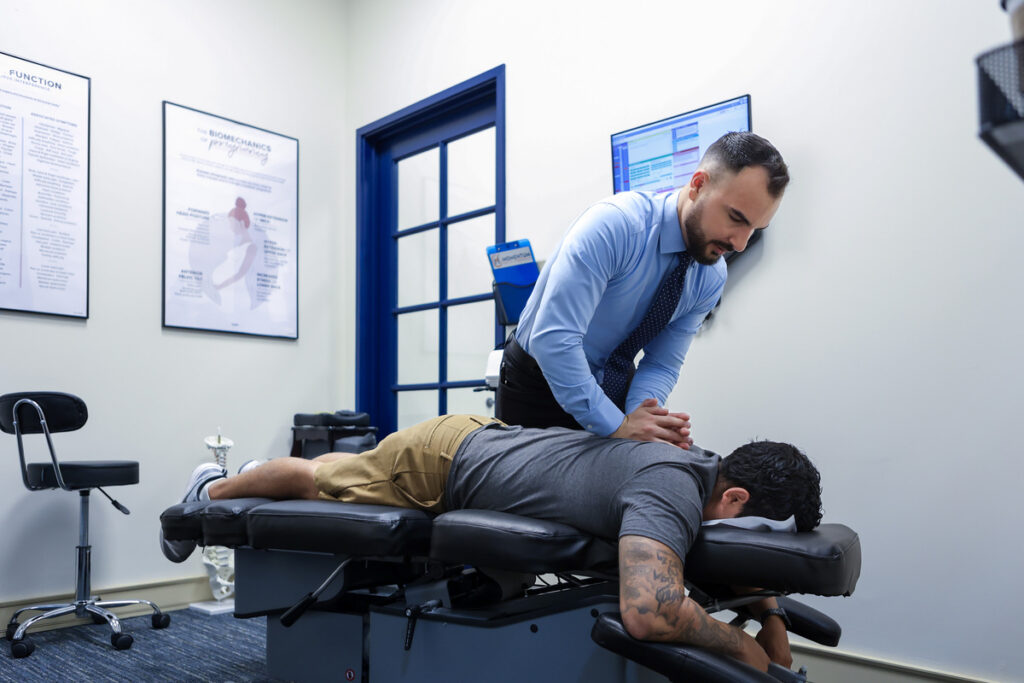
At Momentum Health Chiropractic in San Luis Obispo, we take a whole-body approach to posture. Chiropractic care focuses on the relationship between the spine, the nervous system, and the body’s overall function. When your spinal joints are restricted or misaligned — what chiropractors call subluxations — they can alter your posture and interfere with proper muscle function and nerve signaling.
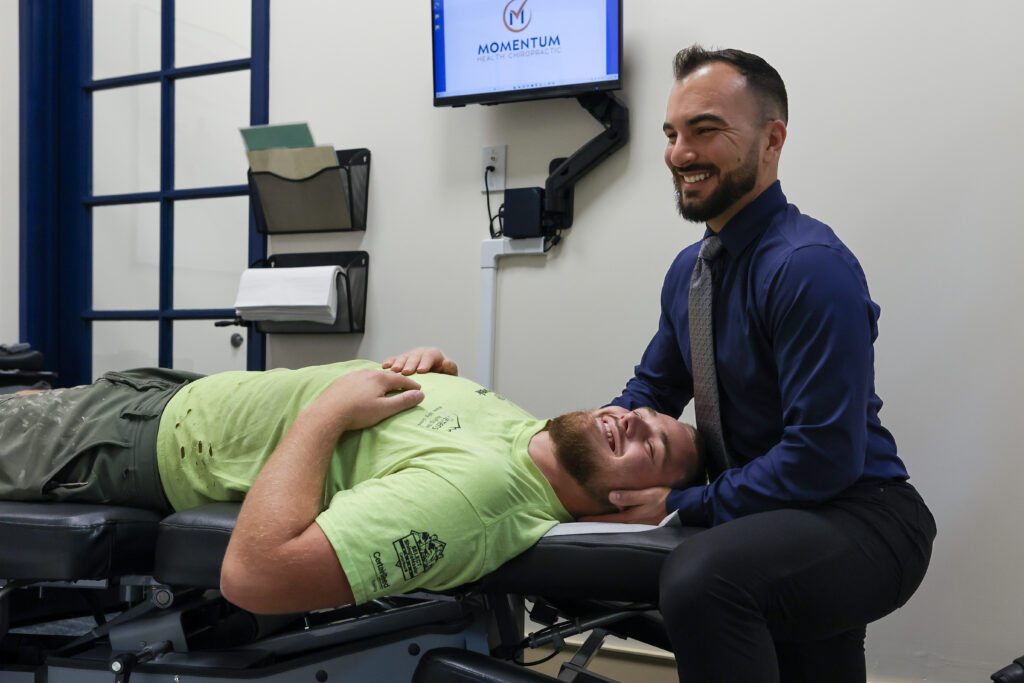
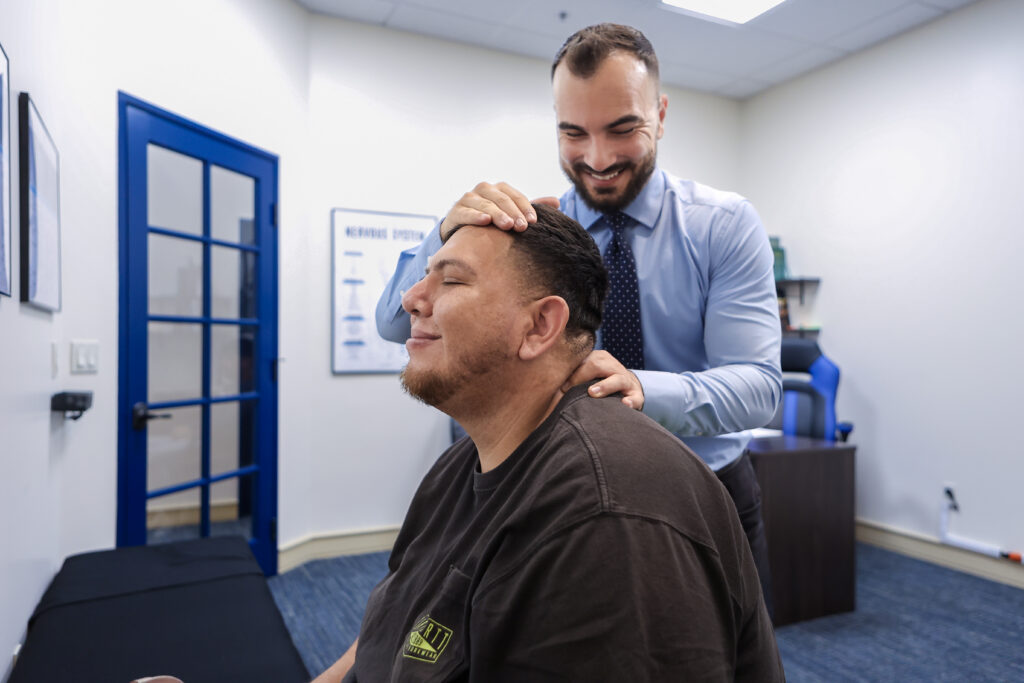
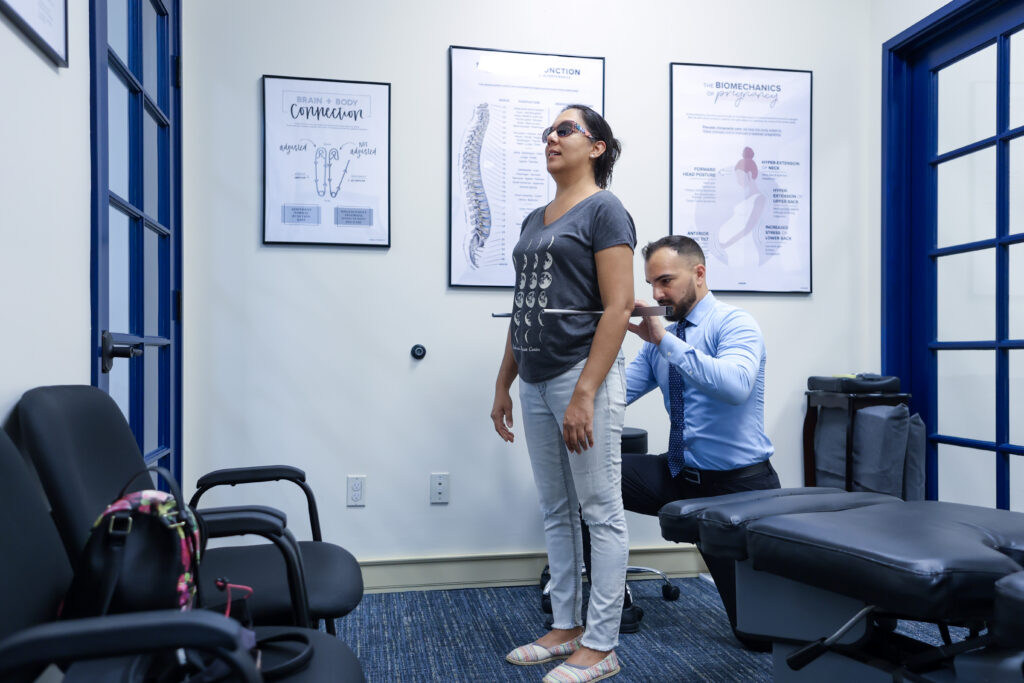
Dr. David Sedghi performs a thorough postural assessment as part of every new patient evaluation. This may involve observing how you stand, how your shoulders sit, whether your hips are level, and identifying areas of restriction or tension in your spine. From there, individualized chiropractic adjustments can help restore proper joint motion, reduce muscle tension, and encourage the spine to settle back toward a more balanced alignment.
Chiropractic adjustments for posture aren’t a one-time fix — and Dr. David Sedghi will be upfront about that. Posture is a deeply ingrained habit pattern, and changing it takes time, consistency, and a combination of in-office care and at-home awareness. Many patients find that as their spinal mobility improves and their muscle tension decreases, maintaining proper posture actually starts to feel more natural and less effortful.
Beyond adjustments, chiropractic care at Momentum Health Chiropractic may include corrective exercises, ergonomic guidance, soft tissue work, and education on movement habits that support lasting postural change. The goal is always to help you feel better and function better — not to create dependency on care.
Practical Tips for Maintaining Proper Posture
The most important thing to understand about maintaining proper posture is that it’s not about holding a rigid, military-straight position all day. It’s about building awareness and making small, sustainable adjustments that reduce unnecessary strain on your body.
Start with your workstation. If you work at a desk, your monitor should be at eye level so you’re not constantly tilting your head up or down. Your keyboard and mouse should be positioned so your elbows are at roughly a 90-degree angle and your wrists are neutral. Your chair should support the natural curve of your lower back — and ideally, your feet should rest flat on the floor. If your chair doesn’t support your lumbar spine well, a small rolled towel or lumbar cushion can make a meaningful difference.
Movement is equally important. No matter how good your ergonomic setup is, sitting for long uninterrupted periods places cumulative stress on your spine and discs. Aim to stand, stretch, or walk briefly every 30 to 45 minutes. Even a 60-second movement break can reduce muscular fatigue and refresh your postural awareness.
When standing, imagine a straight line running from your ear, through your shoulder, hip, knee, and down to your ankle. That alignment — when all those points stack naturally — is what neutral standing posture looks like. Distribute your weight evenly between both feet rather than habitually favoring one side, which can contribute to hip and lower back imbalances over time.
For sleeping posture, side sleeping with a pillow between your knees and back sleeping with a pillow under your knees tend to place the least strain on the spine. Stomach sleeping is generally the least recommended position, as it forces the neck into a rotated position for hours at a time.
When to See a Chiropractor
If you’ve been dealing with recurring neck pain, upper back tightness, frequent headaches, or lower back discomfort, and you suspect your posture may be a contributing factor, it’s a great idea to get a professional evaluation. These symptoms don’t have to be severe to warrant attention — in fact, catching postural dysfunction early makes it significantly easier to correct.
You should also consider scheduling a visit if you notice visible postural changes like one shoulder sitting higher than the other, your head consistently sitting forward, or discomfort when trying to sit or stand upright. A chiropractor like Dr. David Sedghi at Momentum Health Chiropractic can help identify whether these patterns are related to spinal restrictions, muscle imbalances, or both — and create a plan tailored to your specific needs.
There are certain symptoms that warrant prompt medical attention rather than a wait-and-see approach. If you experience sharp pain radiating down your arm or leg, numbness or tingling in your extremities, loss of bladder or bowel control, or severe pain following an injury, please seek medical care right away. These may be signs of nerve compression or other conditions that need to be evaluated urgently.
|
Posture Mistake |
What It Looks Like |
Better Habit |
|---|---|---|
|
Forward Head Posture |
Head sits 2–3 inches in front of shoulders |
Ears aligned over shoulders; chin gently tucked |
|
Rounded Shoulders |
Shoulders roll forward and inward |
Shoulder blades gently retracted; chest open |
|
Slumped Sitting |
Lower back flattened or rounded in chair |
Lumbar support maintained; hips at 90 degrees |
|
Uneven Weight Distribution |
One hip loaded more than the other when standing |
Weight balanced evenly through both feet |
|
Screen Too Low or Too High |
Neck tilted up or chin tucked down all day |
Monitor at eye level; top of screen at eye height |
Myths vs. Facts About Posture
Myth: Good posture means sitting perfectly straight and rigid all day.
Fact: Holding a fixed, rigid position is actually fatiguing and counterproductive. Good posture is dynamic — it means moving frequently and returning to a neutral alignment regularly throughout the day, not maintaining one static position for hours on end.
Myth: Posture problems are only an issue for older people.
Fact: Postural dysfunction is increasingly common in children, teenagers, and young adults — largely driven by screen use and sedentary behavior. We see patients of all ages at Momentum Health Chiropractic in San Luis Obispo, and addressing posture habits early leads to much better long-term outcomes.
Myth: You just need to “try harder” to have good posture.
Fact: Willpower alone isn’t enough when underlying issues like spinal joint restrictions, muscle imbalances, or tight soft tissue are involved. These physical limitations make it genuinely difficult to maintain proper alignment — which is exactly why professional evaluation and care can be so valuable.
Myth: If your posture looks fine, it’s not causing any problems.
Fact: Many postural imbalances aren’t obviously visible to the naked eye but are still placing uneven stress on joints, muscles, and nerves. Internal dysfunction can develop well before outward signs appear, which is why a thorough postural assessment from a qualified chiropractor is so worthwhile.
Myth: Chiropractic adjustments can permanently fix posture in just a few visits.
Fact: Chiropractic care can be a highly effective part of a posture improvement plan, but lasting change requires consistency and active participation from the patient. Combining in-office care with at-home exercises, ergonomic adjustments, and movement habits produces the most meaningful and durable results.
Final Thoughts
Here in San Luis Obispo, we’re fortunate to have a community that genuinely values health and wellbeing. At Momentum Health Chiropractic, Dr. David Sedghi and the team are passionate about helping patients understand that maintaining proper posture isn’t just about appearances — it’s a foundational piece of feeling your best and protecting your body for the long haul.
Whether you’re working at a desk all day, staying active outdoors, raising kids, or managing the demands of a busy career, your posture is influencing how you feel in ways you may not have fully considered. The encouraging news is that no matter where you’re starting from, posture can almost always be improved with the right guidance and commitment.
If you’ve been curious about your own posture or dealing with nagging pain that you haven’t been able to shake, we warmly invite you to reach out to Momentum Health Chiropractic. Dr. David Sedghi takes the time to thoroughly evaluate each patient and build an individualized plan that makes sense for your life, your goals, and your body. We’re here to support the San Luis Obispo community in living with less pain and more vitality — and we’d love to help you do the same.
Frequently Asked Questions
How long does it take to correct poor posture?
The timeline varies depending on how long the postural habits have been present and the underlying causes involved. Many patients begin noticing improvements in comfort and awareness within a few weeks, but meaningful postural correction typically takes several months of consistent effort, including both professional care and at-home habits.
Can poor posture cause headaches?
Yes — poor posture, particularly forward head posture and rounded upper back, places excessive tension on the muscles and joints of the neck and upper back. This can contribute to cervicogenic headaches, which originate from the cervical spine. Addressing posture is often an important part of managing this type of headache.
Is it too late to improve posture if I’ve had bad posture for years?
It’s rarely too late to make meaningful improvements. While deeply ingrained postural habits take more time and effort to change, the body responds well to consistent corrective input regardless of age. A professional evaluation can help identify realistic goals based on your individual situation.
What exercises help improve posture?
Exercises that strengthen the deep core muscles, upper back, and glutes — while also stretching the hip flexors and chest — are generally very beneficial for posture. The specific exercises that are most appropriate for you will depend on your individual postural pattern, which is why personalized guidance from a chiropractor is valuable.
Does sleeping position affect posture?
Absolutely. You spend roughly a third of your life sleeping, and consistently poor sleep positions can reinforce postural imbalances. Back sleeping with a supportive pillow and side sleeping with a pillow between the knees are generally considered the most spine-friendly options.
Can a chiropractor help with posture even if I’m not in pain?
Yes — chiropractic care is not just for pain relief. Many patients visit Momentum Health Chiropractic in San Luis Obispo for preventive and wellness-focused care, including postural assessment and maintenance. Catching and addressing imbalances early can help prevent pain from developing in the first place.
TL;DR
-
Maintaining proper posture supports spinal health, nervous system function, breathing, and overall energy — it’s about much more than appearances.
-
Poor posture is commonly caused by technology use, prolonged sitting, muscle imbalances, and daily habits that develop gradually over time.
-
Signs of poor posture include neck and back pain, rounded shoulders, forward head position, headaches, and unexplained fatigue.
-
Chiropractic care at Momentum Health Chiropractic — with Dr. David Sedghi in San Luis Obispo — can help restore spinal alignment and support lasting postural improvement.
-
Small, consistent changes in your workstation setup, movement habits, and body awareness can make a significant difference in how you feel every day.