

Back injuries have a way of sneaking up on you. One moment you’re carrying groceries, reaching for something on a shelf, or getting out of the car — and the next, you’re frozen in pain and wondering how something so simple went so wrong. The truth is, most back injuries don’t happen in a single dramatic moment. They build slowly over time, the result of small habits, postural patterns, and movement mechanics that quietly stress your spine day after day. Here in San Luis Obispo, Dr. David Sedghi and the team at Momentum Health Chiropractic see this story play out regularly — and the good news is, most of it is preventable. Understanding how to prevent back injuries before they sideline you is one of the most empowering things you can do for your long-term health.
What Does It Mean to Prevent a Back Injury?
Back injury prevention means proactively protecting the structures of your spine — including the vertebrae, discs, muscles, ligaments, and nerves — from the cumulative stress and acute forces that cause damage. It involves building better movement habits, strengthening the muscles that support your spine, and addressing small warning signs before they become serious problems.
Why Back Injuries Happen More Often Than You Think
Back pain is one of the leading causes of disability worldwide, according to the World Health Organization. And yet, most people treat their back as an afterthought — until it stops working the way they need it to. The spine is a remarkably resilient structure, but it has limits. When those limits are exceeded repeatedly — through poor posture, weak supporting muscles, repetitive strain, or sudden awkward movements — something gives.
What makes this especially frustrating is that the actual injury often feels sudden. You bend over to pick something up and your back “goes out.” But in most cases, that moment of acute pain is really the final straw on a spine that has been under strain for weeks, months, or even years. The bend didn’t break you — the accumulated stress did. That’s why prevention matters so much. Addressing the underlying contributors before they reach a breaking point is the whole game.
Here in San Luis Obispo, many of the patients who walk through the doors at Momentum Health Chiropractic describe exactly this pattern. They pushed through stiffness in the morning, ignored tightness after long drives or desk work, and told themselves it would pass. For some, it did — temporarily. For others, a manageable ache became a debilitating injury that disrupted their work, sleep, and quality of life.
Understanding Your Spine: A Quick Primer
You don’t need a medical degree to understand your spine, but a basic picture helps. Your spine is made up of 33 vertebrae stacked on top of each other, separated by soft discs that act as shock absorbers. Running through the center is your spinal cord, which sends nerve signals to every part of your body. Surrounding all of this is a complex network of muscles, tendons, and ligaments that hold everything together and allow you to move.
When any of these components are compromised — a disc that loses hydration and height, a muscle that tightens and pulls a vertebra out of its ideal alignment, or a ligament stretched from a sudden force — the result can be pain, reduced mobility, or nerve irritation. The lower back, or lumbar spine, is particularly vulnerable because it bears the majority of your body’s weight and is involved in almost every movement you make.
What’s worth knowing is that the spine is not fragile by design. It’s built for movement. Problems tend to arise not from movement itself, but from the wrong kinds of movement done repeatedly — or from too little movement paired with prolonged static positions. Both extremes stress the spine in different ways, which is why a balanced, active lifestyle with good mechanics is the foundation of back injury prevention.
Common Risk Factors That Put Your Back in Danger
Some risk factors for back injuries are well within your control. Others — like age or certain occupational demands — require more creative management. Understanding what’s working against your spine helps you make smarter decisions every day.
Prolonged sitting is one of the most significant contributors to back problems in modern life. When you sit for extended periods, the natural curve of your lumbar spine tends to flatten, the hip flexor muscles shorten, and the core muscles that stabilize your spine disengage. The result is a spine that is unsupported and under uneven load — hour after hour, day after day. This is a reality for many people in San Luis Obispo who work desk jobs or spend long stretches commuting.
Poor lifting mechanics are another major culprit. Bending forward at the waist to pick something up — even something relatively light — places enormous stress on the lumbar discs. The physics of leverage mean that even a 20-pound object can generate several times that force on the structures of your lower back when lifted incorrectly. Learning to hinge at the hips, keep the object close to your body, and engage your core before lifting is genuinely protective.
Weak core musculature deserves its own mention. The “core” is not just your abdominals — it’s the entire cylinder of muscles surrounding your midsection, including the muscles of your lower back, hips, and pelvic floor. These muscles work together to create a stable platform for every movement your spine makes. When they’re weak or uncoordinated, your spine absorbs forces it shouldn’t have to, and the risk of injury climbs. Evidence indicates that core strengthening is one of the most effective long-term strategies for preventing recurrent low back pain.
Excess body weight, particularly around the midsection, shifts your center of gravity forward and increases the compressive load on the lumbar spine. Sleep position and mattress quality, though often overlooked, also play a meaningful role in how well your spine recovers overnight. And finally, chronic stress and tension — which many people carry in the muscles of their neck, shoulders, and lower back — creates a background state of muscle tightness that makes the spine more vulnerable to strain.
How Chiropractic Care Fits Into Back Injury Prevention
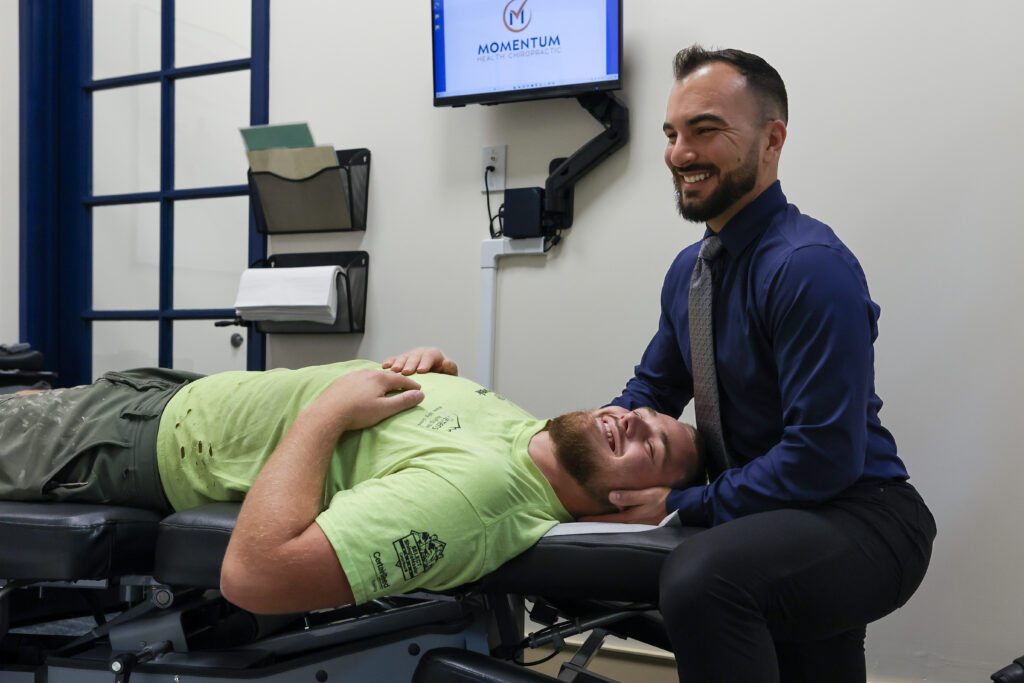
Most people think of chiropractic care as something you seek out after an injury. And while it’s absolutely effective in that context, it’s also a powerful tool for prevention. Dr. David Sedghi at Momentum Health Chiropractic takes a proactive approach — helping patients in San Luis Obispo identify and address the mechanical imbalances, movement restrictions, and postural patterns that put them at risk before they result in injury.
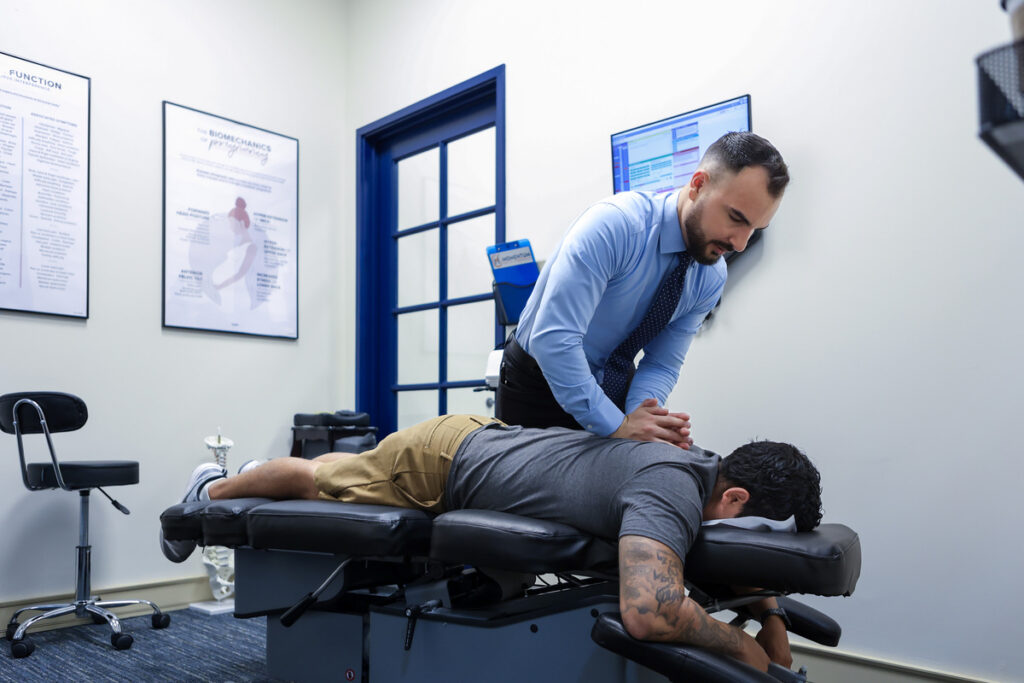
Chiropractic adjustments work to restore proper alignment and motion to the joints of the spine. When vertebrae aren’t moving freely through their full range of motion — a condition called a subluxation or joint restriction — the surrounding muscles compensate, often by tightening up. This compensation creates uneven loading on the spine and reduces your body’s ability to absorb and distribute force properly. Regular chiropractic care helps keep those joints moving as they should, which reduces the mechanical stress that accumulates over time.
Beyond adjustments, Momentum Health Chiropractic offers a range of supportive therapies designed to work together toward a clear goal. Intersegmental traction (roller massage) tables help mobilize the spine and improve circulation to the discs. Therapeutic heating increases tissue pliability and reduces muscle tension before hands-on work. For patients dealing with disc-related concerns, non-surgical spinal decompression gently unloads the spine and creates conditions that support natural healing. These aren’t just comfort measures — they’re clinical tools that support the function and resilience of your spine.
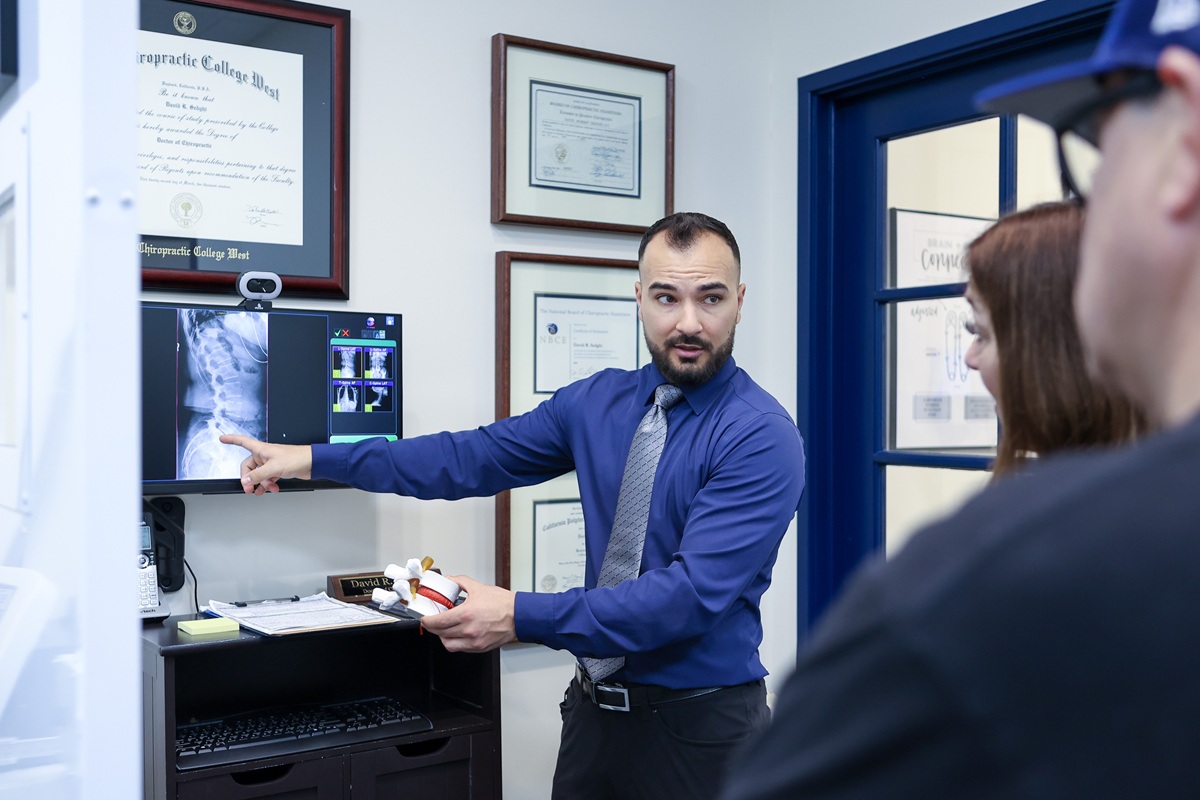
Dr. David Sedghi also emphasizes patient education as part of care. Understanding your own body — your posture tendencies, your movement habits, your areas of weakness — is what allows you to make the changes that create lasting results. That’s not just good chiropractic care. That’s real empowerment.
Practical Tips to Protect Your Back Every Day
Prevention doesn’t require an overhaul of your entire life. Small, consistent changes in how you move, sit, and care for your body add up to meaningful protection over time. Here are some of the most evidence-backed strategies for keeping your back healthy.
Move more throughout the day. If you work at a desk, standing up and taking a short walk every 45 to 60 minutes does more for your spine than almost anything else. Prolonged static posture — whether sitting or standing — is hard on spinal structures. Variation and movement are what your spine is designed for. Set a timer if you need to, but break up long periods of stillness regularly.
Strengthen your posterior chain. The muscles that run along the back of your body — your glutes, hamstrings, and back extensors — are critical for spinal support and healthy lifting mechanics. Exercises like glute bridges, deadlifts with proper form, and bird-dog holds build the functional strength that protects your lower back during daily activities. You don’t need to be in the gym every day to make a difference. Consistency matters more than intensity.
Pay attention to your sleep setup. Sleeping on a mattress that doesn’t support your spine’s natural curve — or in a position that creates prolonged twisting or compression — can leave you waking up stiff and sore. Generally speaking, sleeping on your side with a pillow between your knees, or on your back with support under your knees, tends to be easiest on the lumbar spine. If you consistently wake up with back pain, your sleep environment is worth evaluating.
Practice mindful lifting every time. It only takes one poorly executed lift to create a significant disc injury. Before you lift anything — regardless of how light it seems — take a breath, engage your core, hinge at your hips rather than rounding your low back, and keep the object as close to your body as possible. Make this a habit, not a conscious effort. With repetition, good mechanics become automatic.
Stay hydrated. This one surprises many patients, but the discs in your spine are largely composed of water. They rely on hydration to maintain their height, flexibility, and shock-absorbing capacity. Chronic dehydration contributes to disc degeneration over time. Drinking adequate water throughout the day is a simple but real part of spinal health maintenance.
When to See a Chiropractor
You don’t have to be in serious pain to benefit from chiropractic care. In fact, some of the best outcomes happen when patients come in early — before a manageable issue becomes a significant injury. If you’re noticing recurring stiffness in the morning, tightness after sitting for long periods, or a sense that your back “feels off” without being acutely painful, those are meaningful signals worth paying attention to.
More acute reasons to schedule an appointment include: a new episode of low back pain that doesn’t improve within a few days of rest, pain that radiates into your buttock or down your leg, or a back that “goes out” repeatedly. These patterns suggest something mechanical is happening that’s worth evaluating by a professional.
There are also situations where chiropractic care is not the first step. If you are experiencing loss of bladder or bowel control, severe numbness or weakness in the legs, or pain following a significant trauma, these symptoms require emergency medical evaluation. Dr. David Sedghi and the team at Momentum Health Chiropractic are always committed to referring patients to the appropriate level of care when needed — your safety comes first, always.
Back Injury Risk Factors vs. Preventive Strategies
Risk Factor | How It Harms Your Spine | Preventive Strategy |
|---|---|---|
Prolonged sitting | Flattens lumbar curve, disengages core stabilizers, increases disc pressure | Move every 45-60 minutes; use a lumbar support cushion |
Poor lifting mechanics | Multiplies compressive force on lumbar discs | Hip hinge, keep objects close, engage core before lifting |
Weak core muscles | Transfers load to passive structures (discs, ligaments) | Consistent core and glute strengthening exercises |
Poor sleep position/surface | Sustained spinal stress overnight, morning stiffness | Side or back sleeping with appropriate pillow support |
Dehydration | Reduces disc hydration and shock-absorbing capacity | Consistent daily water intake throughout the day |
Chronic muscle tension from stress | Keeps muscles in protective guarding; alters spinal mechanics | Regular movement, chiropractic care, stress management practices |
Myths vs. Facts About Back Injury Prevention
Myth: Rest is the best medicine for a back problem.
Fact: While short periods of rest may be helpful immediately after an acute injury, prolonged bed rest has actually been shown to slow recovery. The research consensus now strongly favors staying gently active. Movement promotes circulation, prevents muscle atrophy, and supports disc nutrition. The goal is appropriate movement, not avoidance.
Myth: Back injuries only happen to people who do heavy physical labor.
Fact: Sedentary lifestyles can be just as damaging to the spine as heavy labor — sometimes more so. Sitting for hours each day with poor posture, combined with weak supporting muscles, creates the ideal conditions for disc problems, joint dysfunction, and chronic low back pain. Office workers, drivers, and remote employees are all high-risk populations.
Myth: If you don’t have pain, your spine is healthy.
Fact: Pain is often a late indicator of a problem, not an early one. Spinal degeneration, postural imbalances, and joint restrictions can develop and progress silently for years before pain becomes noticeable. This is one of the strongest arguments for regular chiropractic check-ins as a preventive measure, rather than waiting until something hurts badly enough to demand attention.
Myth: Chiropractic adjustments are only for people who already have back pain.
Fact: Many patients visit Dr. David Sedghi at Momentum Health Chiropractic specifically to maintain spinal health and prevent future problems. Regular maintenance care helps keep the spine aligned, joints mobile, and muscles balanced — all of which reduce the likelihood of a significant injury occurring in the first place.
Myth: Core exercises alone are enough to prevent back injuries.
Fact: Core strengthening is an important piece of the puzzle, but it’s not the whole picture. Joint mobility, flexibility, movement mechanics, ergonomics, sleep habits, and overall lifestyle all play a role. A comprehensive approach — ideally guided by a knowledgeable care team — is more effective than any single strategy on its own.
Final Thoughts from Momentum Health Chiropractic
Back injuries don’t have to be inevitable. With the right knowledge, the right habits, and the right support, most people can protect their spine and stay active well into their later decades. That’s not wishful thinking — it’s what we see happen every day at Momentum Health Chiropractic here in San Luis Obispo.
Dr. David Sedghi and the entire team are here to help you understand what’s happening in your body, build a plan that makes sense for your life, and give you the tools to keep moving forward — literally and figuratively. Whether you’re dealing with early warning signs or just want to stay ahead of a problem before it starts, you don’t have to figure it out alone.
If you’ve been putting off getting your back evaluated, today is a genuinely good day to change that. Feeling better starts with momentum — and momentum starts with one appointment. We’d love to see you in our San Luis Obispo office and help you build the kind of spinal health that lets you live on your own terms.
Frequently Asked Questions
Can back injuries be completely prevented?
While no prevention strategy eliminates all risk, the vast majority of common back injuries — particularly those caused by poor mechanics, weak musculature, and postural habits — are highly preventable with the right approach. Building strong, consistent habits around movement and spinal health significantly reduces your risk over time.
How often should I see a chiropractor for preventive care?
This varies depending on your lifestyle, age, and history. Some patients benefit from monthly maintenance visits, while others do well with periodic check-ins a few times per year. Dr. David Sedghi at Momentum Health Chiropractic evaluates each patient individually and recommends a care schedule that aligns with their specific needs and goals — not a one-size-fits-all approach.
Is it too late to prevent back problems if I already have some degeneration?
It is never too late to take protective action. While degenerative changes to the spine cannot be fully reversed, their progression can often be slowed, and the pain and functional limitations they cause can frequently be reduced significantly. Patients with existing disc degeneration or arthritis often respond very well to chiropractic care and lifestyle modifications.
What’s the single most important thing I can do for my back right now?
Move more. If you currently spend long stretches sitting or standing in static positions, introducing regular movement breaks is probably the highest-impact single change you can make. Add core and hip strengthening over time, and consider scheduling an evaluation with a chiropractor to identify any existing imbalances before they become a bigger problem.
Does chiropractic care help with disc problems specifically?
Yes — chiropractic care, including spinal adjustments and non-surgical spinal decompression, has been shown to be a helpful conservative option for many types of disc-related pain. It’s worth noting that outcomes vary depending on the individual and the severity of the disc involvement, which is why a thorough evaluation is always the right starting point.
Is there an age at which back injury prevention becomes less effective?
No — the principles of spinal health are beneficial at every age. Older adults, in particular, stand to gain significantly from chiropractic care and supportive exercise, as both help maintain mobility, reduce fall risk, and slow the functional decline that’s often assumed to be unavoidable. It’s never too early or too late to invest in your spine.
TL;DR — Key Takeaways
Most back injuries are not random events — they’re the result of accumulated stress from poor posture, weak muscles, and repetitive movement patterns that can be identified and changed.
Prolonged sitting, poor lifting mechanics, weak core muscles, and dehydration are among the most common and controllable risk factors for back injuries.
Chiropractic care is not just reactive — it’s a powerful preventive tool that helps keep your spine mobile, aligned, and resilient before problems develop.
Simple daily habits like moving every hour, practicing good lifting mechanics, staying hydrated, and strengthening your posterior chain make a real, cumulative difference.
Dr. David Sedghi and the team at Momentum Health Chiropractic in San Luis Obispo are here to help you build a personalized plan for long-term spinal health — starting with your very first visit.