
Shoulder pain has a way of sneaking into every part of your day. Whether it’s the sharp pinch when you reach for something on a high shelf, the dull ache that wakes you up at 3 a.m., or the stiffness that makes driving feel like a workout, it’s one of those problems that’s impossible to ignore. Here in San Luis Obispo, we see a steady stream of patients at Momentum Chiropractic who are frustrated because their shoulder pain just won’t quit — and in many cases, they’ve been managing it for months or even years without understanding what’s actually causing it. That’s what we want to change today. In this article, Dr. David Sedghi walks you through the most common causes of shoulder pain, what’s happening inside the joint when things go wrong, and how conservative chiropractic care may be able to help you build real momentum toward recovery.
What Is Shoulder Pain, Exactly?
Shoulder pain refers to any discomfort, achiness, stiffness, or sharp sensation felt in or around the shoulder joint — including the front, side, top, or back of the shoulder, and sometimes extending down the arm or up toward the neck. Because the shoulder is one of the most complex and mobile joints in the human body, pain there can stem from a wide variety of structures: muscles, tendons, bursae, ligaments, and even the cervical spine.
Understanding Shoulder Anatomy: Why It’s So Complex
Before we talk about what causes shoulder pain, it helps to understand why the shoulder is so vulnerable in the first place. The shoulder is a ball-and-socket joint, where the top of your upper arm bone (the humerus) sits in a shallow cup-like socket on your shoulder blade (the scapula). This design gives your arm an extraordinary range of motion — far more than your hip, which is also a ball-and-socket joint but much more deeply supported.
The tradeoff for all that mobility is stability. Unlike the hip, the shoulder relies heavily on soft tissue — specifically a group of four muscles and their tendons called the rotator cuff — to hold everything in place. Surrounding the joint is also a fluid-filled sac called the bursa, which cushions movement, along with the acromioclavicular (AC) joint where your collarbone meets your shoulder blade.
Add in the fact that the shoulder works in coordination with the neck, thoracic spine, and ribcage, and you start to see why a problem anywhere along that chain can show up as shoulder pain. Dr. David Sedghi takes this whole-system perspective into account when evaluating shoulder complaints — because the source of your pain isn’t always exactly where it hurts.
Top Causes of Shoulder Pain
Understanding the root cause of your shoulder pain is the first step toward actually resolving it. Here are the most common culprits we see at Momentum Chiropractic in San Luis Obispo.
Rotator Cuff Injuries
The rotator cuff is probably the most talked-about shoulder structure for good reason — it’s involved in almost every shoulder movement, and it’s one of the most frequently injured areas in the body. Rotator cuff problems can range from mild inflammation and tendinitis (irritation of the tendon) to partial or full tears of the muscle tissue itself. This type of injury is especially common in people who do repetitive overhead work, athletes who throw or swing, and older adults whose tendons have naturally lost some of their elasticity over time.
The hallmark sign of a rotator cuff problem is pain or weakness when lifting the arm — particularly out to the side or overhead. Many people also notice a dull, deep ache in the shoulder that worsens at night, especially when lying on the affected side. If this sounds familiar, you’re not alone. It’s one of the most frequent presentations we see walk through the door at Momentum Chiropractic.
Shoulder Impingement Syndrome
Shoulder impingement happens when the tendons of the rotator cuff become compressed or “pinched” as they pass through the narrow space beneath the acromion (the bony ridge on top of the shoulder blade). It’s often described as a painful arc — meaning the pain is worst during a specific range of motion, typically between 60 and 120 degrees of arm elevation. Poor posture, particularly the forward-rounded shoulder position so common among desk workers and phone users, is one of the leading contributors to this condition.
Many patients in San Luis Obispo who come to Momentum Chiropractic with impingement have been sitting at workstations for hours a day without ergonomic support. Over time, that posture shifts how the shoulder blade sits relative to the arm bone, narrowing the subacromial space and setting the stage for compression and irritation.
Bursitis
The bursa is a small, fluid-filled sac that acts like a cushion between bones and soft tissues. When it becomes inflamed — a condition called bursitis — it causes significant pain, tenderness, and swelling. Shoulder bursitis often develops alongside rotator cuff problems or impingement, though it can also be triggered by a fall, repetitive motion, or even prolonged pressure on the shoulder. The pain tends to be aching and diffuse, worsening with activity and sometimes limiting overhead movement considerably.
Cervical Spine Issues (Referred Pain)
This one surprises a lot of patients. Shoulder pain doesn’t always originate in the shoulder itself. The nerves that exit the cervical spine (your neck) travel through the shoulder and down the arm — which means a disc problem, spinal misalignment, or nerve compression in the neck can produce pain that feels for all the world like it’s coming from the shoulder. This is called referred pain, and it’s an important reason why Dr. David Sedghi evaluates the entire cervical and thoracic spine as part of a shoulder complaint, not just the joint itself.
Frozen Shoulder (Adhesive Capsulitis)
Frozen shoulder is a condition in which the connective tissue surrounding the shoulder joint becomes thickened, inflamed, and tight — causing a progressive and often painful loss of motion. It tends to develop gradually and is more common in people over 40, in individuals who have had a period of shoulder immobility, and in those with certain underlying health conditions. The frustrating part about frozen shoulder is how limiting it becomes: even simple tasks like putting on a jacket or reaching behind your back can feel impossible at the height of the condition.
Acromioclavicular (AC) Joint Injuries
The AC joint is where your collarbone meets the top of your shoulder blade. This joint is often injured in falls, particularly when landing directly on the shoulder, and is a common sports injury as well. Patients typically describe a sharp pain at the very top of the shoulder, sometimes with a visible bump if the joint has been significantly disrupted. Even minor AC joint sprains can make pressing motions (like a push-up) and crossing the arm across the body quite painful.
Postural Dysfunction and Muscle Imbalances
Not all shoulder pain comes from a specific structural injury. Chronic tension, overuse, and poor posture can create muscle imbalances that put the shoulder under constant, low-grade stress. When the muscles of the chest become tight and the muscles of the upper back become weak and inhibited, the shoulder blade shifts forward and the joint mechanics become inefficient. Over time, this pattern leads to pain, reduced range of motion, and a much higher likelihood of injury. It’s a pattern Dr. David Sedghi sees frequently in patients across the Central Coast — and it’s very much addressable through the right combination of hands-on care and posture correction.
Signs and Symptoms to Watch For
Shoulder pain presents differently depending on what’s causing it. That said, there are several common warning signs that suggest it’s time to stop waiting and get a professional evaluation. You may be dealing with a meaningful shoulder issue if you notice persistent pain that lasts more than a few days without improvement, difficulty lifting your arm overhead or behind your back, weakness in the arm during normal activities, a clicking or grinding sensation in the joint, or pain that wakes you from sleep consistently.
If you experience sudden severe pain, swelling, or loss of sensation following a fall or impact — or if shoulder pain is accompanied by chest pain or shortness of breath — seek emergency medical care promptly, as these symptoms can indicate something more serious than a musculoskeletal issue.
How Chiropractic Care Fits In
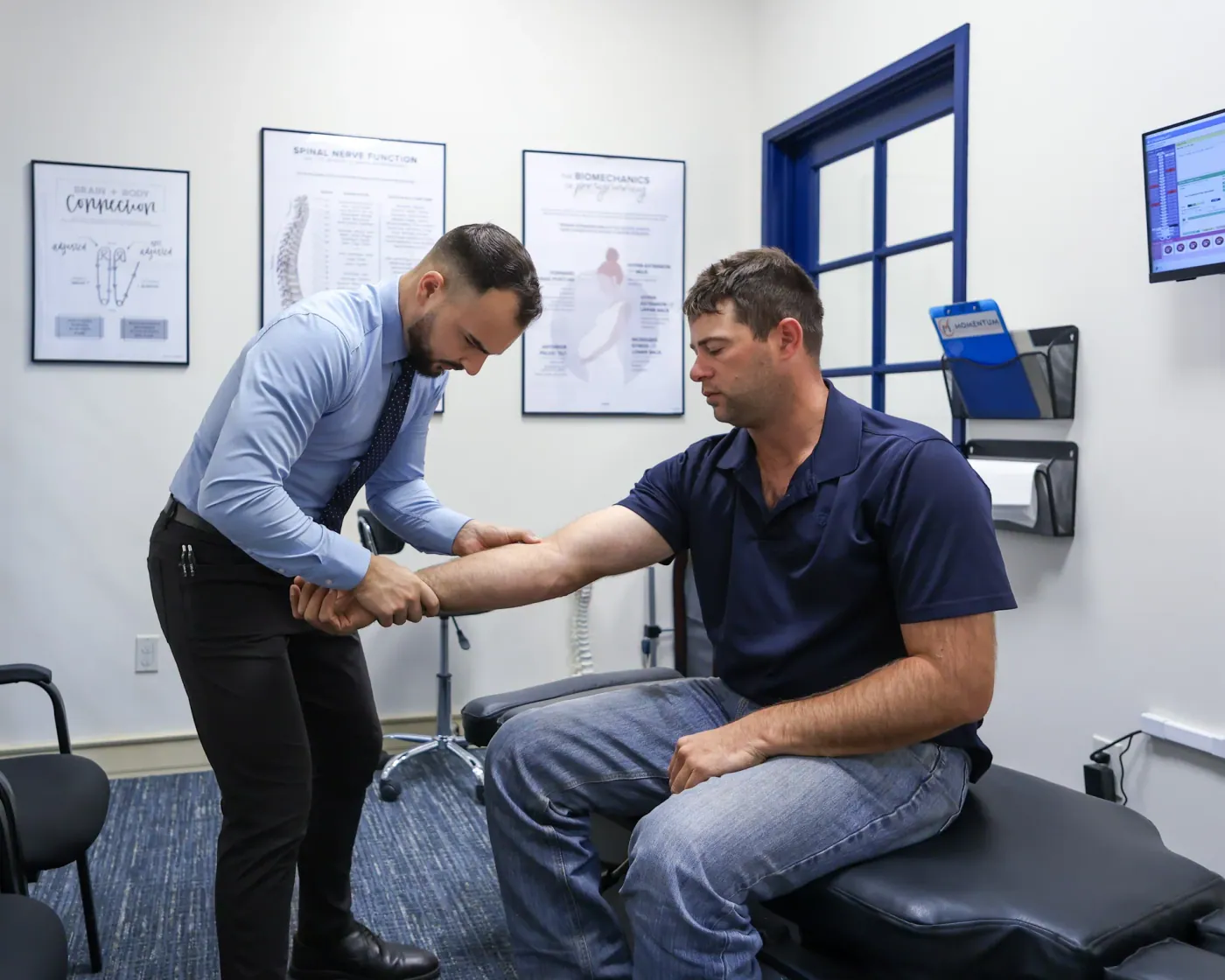
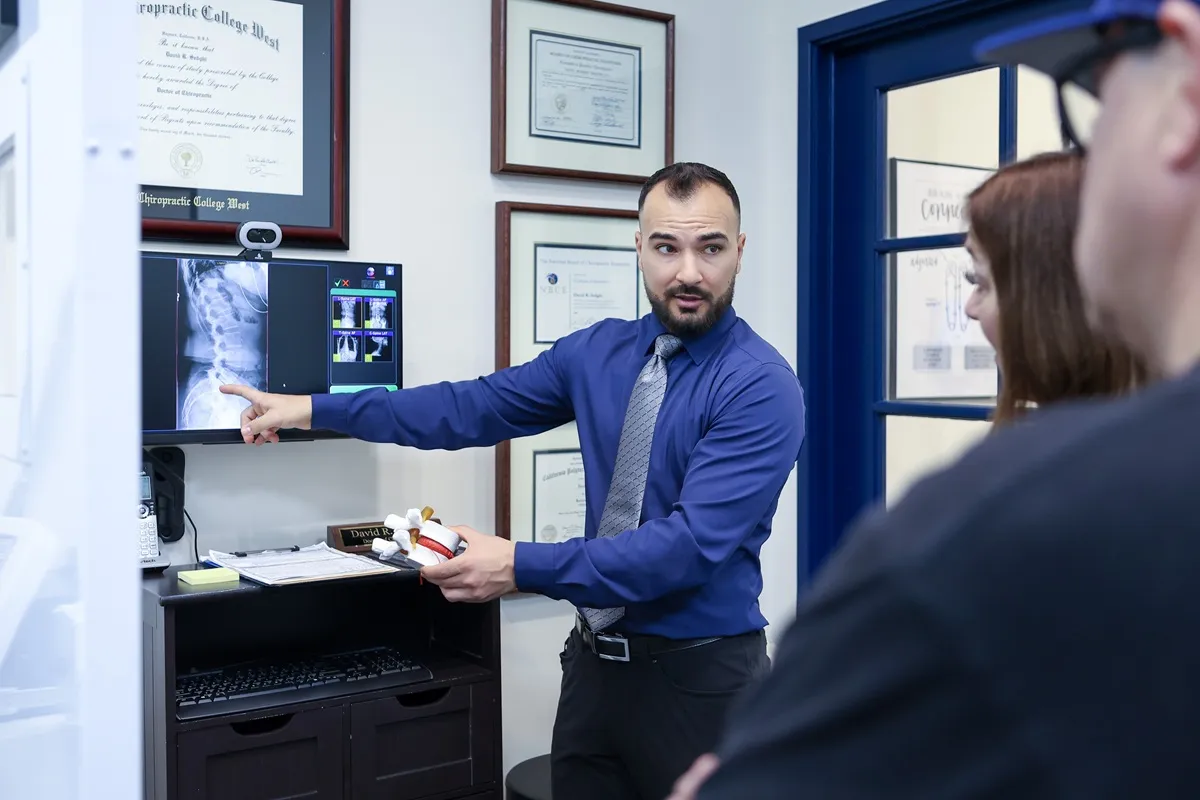
Chiropractic care offers a non-surgical, drug-free approach to shoulder pain that focuses on identifying and addressing the underlying mechanical causes. At Momentum Chiropractic in San Luis Obispo, Dr. David Sedghi begins with a thorough evaluation that includes X-rays and a hands-on assessment of your shoulder, neck, and thoracic spine — because getting the full picture is essential to building the right care plan.
Depending on the findings, chiropractic care for shoulder pain may involve spinal and extremity adjustments to restore joint alignment and mobility, soft tissue work to address muscle tension and trigger points, and intersegmental traction to help reduce spinal stress that may be contributing to your symptoms. The practice also uses targeted heating therapy to help relax surrounding musculature and prepare the tissues for more effective treatment.
Research suggests that manual therapy — which includes chiropractic manipulation and mobilization — may be beneficial for certain types of shoulder pain, particularly those involving the cervical and thoracic spine. Evidence from conservative care literature indicates that addressing spinal alignment alongside local shoulder treatment often produces better outcomes than treating the joint in isolation. At Momentum Chiropractic, that integrative approach is built into every care plan from visit one.
Practical Tips for Shoulder Health
While professional care is important when shoulder pain is persistent or limiting, there are several things you can do day-to-day to support your shoulder health and reduce the risk of recurring problems.
First, pay attention to your workstation setup. If your monitor is too low, your keyboard is too far away, or your chair lacks proper armrest support, your shoulders are compensating constantly — and that adds up. Aim for a screen height that lets you look forward (not down), and keep your elbows at roughly a 90-degree angle when typing.
Second, be mindful of how you sleep. Sleeping on your side with your arm tucked under your head puts significant stress on the shoulder joint and surrounding tissues. Using a supportive pillow that maintains neutral cervical alignment — and avoiding prolonged pressure on a painful shoulder — can make a real difference in how you feel each morning.
Third, avoid prolonged static postures. If you’re sitting at a desk, driving long distances, or working with your arms in any fixed position for extended periods, build in regular movement breaks. Even brief shoulder rolls, gentle neck stretches, and scapular retractions (squeezing your shoulder blades together lightly) can help reduce the accumulative strain on the joint throughout the day.
When to See a Chiropractor
A good rule of thumb: if your shoulder pain has lasted more than one to two weeks without clear improvement, it’s worth getting it evaluated by a professional. Waiting and hoping it resolves on its own is a strategy that often leads to chronic compensation patterns, where other areas of the neck and upper back start working harder to make up for the limited shoulder — which can create a whole new set of problems down the road.
Chiropractic evaluation is especially appropriate when your shoulder pain is accompanied by neck stiffness or headaches, when the pain worsens with prolonged desk work or driving, when you’ve noticed a gradual loss of range of motion, or when the discomfort is affecting your sleep consistently. These are all signs that the problem may involve more than a simple soft tissue strain, and that a careful assessment is overdue.
As noted earlier, some symptoms call for immediate medical attention rather than a chiropractic visit: sudden severe shoulder pain following trauma, visible deformity, or systemic symptoms such as fever or unexplained weight loss alongside musculoskeletal pain. Numbness or tingling that extends through the arm and into the hand isn’t an emergency on its own, but it can signal nerve involvement and should be evaluated promptly, sometimes with imaging.
Common Shoulder Issues at a Glance
|
Condition |
Primary Symptom |
Common Trigger |
Chiropractic Relevance |
|---|---|---|---|
|
Rotator Cuff Tendinitis |
Deep ache; pain with overhead lifting |
Repetitive overhead motion, aging |
High — soft tissue and joint work may help |
|
Shoulder Impingement |
Painful arc of motion (60–120°) |
Poor posture, forward shoulder rounding |
High — postural correction is central to care |
|
Bursitis |
Diffuse aching; tenderness with pressure |
Repetitive motion, falls, prolonged compression |
Moderate — reducing joint stress may support recovery |
|
Cervical Referred Pain |
Shoulder/arm pain originating from neck |
Disc issues, spinal misalignment |
High — spinal evaluation is essential |
|
Frozen Shoulder |
Progressive stiffness; significant loss of motion |
Immobility, inflammation, certain health conditions |
Moderate — gentle mobilization may aid mobility |
|
AC Joint Sprain |
Pain at top of shoulder; pain with pressing motions |
Falls, direct shoulder impact |
Moderate — joint evaluation and supportive care |
|
Postural Dysfunction |
Chronic tension, fatigue, reduced range of motion |
Prolonged sitting, muscle imbalances |
High — core focus of chiropractic and corrective care |
Myths vs. Facts About Shoulder Pain
Myth: If you can still move your shoulder, it’s probably fine.
Fact: Range of motion is not a reliable indicator of whether a shoulder problem needs attention. Many significant rotator cuff injuries — including partial tears — allow for surprisingly preserved movement while still causing meaningful pain and long-term damage if left unaddressed. The ability to move doesn’t mean the injury is minor.
Myth: Rest is always the best remedy for shoulder pain.
Fact: While rest is appropriate immediately following acute injury, prolonged rest can actually make many shoulder conditions worse. Frozen shoulder, in particular, can progress when the joint is immobilized for too long. Controlled, guided movement — often facilitated by a chiropractor or physical therapist — tends to produce better outcomes than complete inactivity.
Myth: Shoulder pain that isn’t from an obvious injury will go away on its own.
Fact: Pain from postural dysfunction, muscle imbalances, or chronic overuse rarely resolves without addressing the underlying mechanics. Without intervention, these patterns tend to become more ingrained over time — making them harder to unwind and more likely to result in a secondary injury down the road.
Myth: Chiropractic care is only for back and neck pain.
Fact: Chiropractors are trained in the evaluation and management of the entire musculoskeletal system, including extremity joints like the shoulder, elbow, hip, and knee. At Momentum Chiropractic, extremity care is a routine part of what Dr. David Sedghi offers — and for many patients with shoulder pain rooted in cervical spine issues or postural dysfunction, chiropractic care is a highly logical first line of conservative treatment.
Myth: Surgery is inevitable for rotator cuff problems.
Fact: Many rotator cuff injuries — particularly tendinitis and partial tears — respond well to conservative care without ever requiring surgery. Evidence from orthopedic and rehabilitation literature suggests that a significant number of patients with even moderate rotator cuff pathology improve meaningfully with non-surgical management, including manual therapy, exercise rehabilitation, and postural correction. Surgery may be necessary in certain cases, but it is rarely the only path forward.
Final Thoughts from Momentum Chiropractic
Shoulder pain is one of those conditions that tends to quietly expand its territory — what starts as occasional discomfort can gradually start affecting your sleep, your work, your workouts, and your mood. The good news is that most shoulder pain is rooted in mechanical causes that respond well to the right kind of conservative care. You don’t have to accept it as permanent, and you don’t have to jump straight to injections or surgery to find relief.
At Momentum Chiropractic in San Luis Obispo, Dr. David Sedghi and our team are here to help you understand what’s actually going on with your shoulder — and to build a clear, personalized path toward real relief. We take the time to listen, to look at the whole picture, and to start making meaningful progress from your very first visit. The Central Coast community has trusted us to deliver that kind of care, and we’re proud to continue earning it every day.
If shoulder pain has been slowing you down, it’s time to stop waiting and start building some momentum. Your first visit is $97 and includes a consultation, exam, X-rays and your first adjustment. Book online at /new-patients/ or call (805) 541-6966 to take the first step toward feeling like yourself again.
Frequently Asked Questions About Shoulder Pain
Can a chiropractor help with shoulder pain?
Yes, in many cases. Chiropractors are trained to evaluate and manage musculoskeletal shoulder conditions, particularly those involving postural dysfunction, cervical spine contributions, and soft tissue imbalances. At Momentum Chiropractic, Dr. David Sedghi assesses the full picture — including the neck and upper back — to identify the root cause and build an appropriate care plan.
How do I know if my shoulder pain is coming from my neck?
Referred pain from the cervical spine can be difficult to distinguish from true shoulder joint pain without a professional evaluation. Key clues include pain that radiates from the neck down into the shoulder or arm, associated neck stiffness or headaches, or symptoms that change depending on your head position. A thorough spinal and shoulder exam is the best way to sort it out.
How long does shoulder pain typically last?
It depends significantly on the underlying cause and whether it’s being addressed. Mild soft tissue strains may resolve in a few weeks with appropriate care and activity modification. Conditions like frozen shoulder or chronic impingement can persist for months if the mechanical factors driving them aren’t corrected. Early evaluation tends to lead to faster resolution.
Is it safe to exercise with shoulder pain?
It depends on the type of pain and the activity. Gentle, controlled movement is often beneficial and may be recommended as part of a care plan. However, pushing through sharp, worsening pain during exercise can aggravate the underlying issue. It’s best to get a professional opinion before continuing or modifying a workout routine when shoulder pain is present.
What makes shoulder pain worse at night?
Nighttime shoulder pain is a hallmark of several conditions, particularly rotator cuff problems and bursitis. Lying on the affected shoulder increases pressure on inflamed tissues, and the lack of daytime distraction makes the pain more noticeable. Changes in blood flow and inflammation patterns during rest also play a role.
Can poor posture really cause shoulder pain?
Absolutely. Forward head posture and rounded shoulders alter the mechanics of the entire shoulder girdle, reducing the space available for tendons to move freely and placing chronic strain on both the muscles and the joint. It’s one of the most common and correctable contributors to shoulder pain that Dr. David Sedghi addresses at Momentum Chiropractic.
TL;DR
-
Shoulder pain is most commonly caused by rotator cuff issues, impingement, bursitis, cervical spine referred pain, frozen shoulder, AC joint sprains, or postural dysfunction.
-
Because the shoulder works in coordination with the neck and upper back, the source of your pain isn’t always where it hurts — a full spinal evaluation matters.
-
Most shoulder pain responds well to conservative, non-surgical care when addressed early and correctly.
-
Practical habits like ergonomic workstation setup, mindful sleeping positions, and regular movement breaks can significantly reduce daily shoulder strain.
-
If your shoulder pain has lasted more than one to two weeks or is affecting your sleep and daily activities, it’s time to get it evaluated at Momentum Chiropractic in San Luis Obispo.