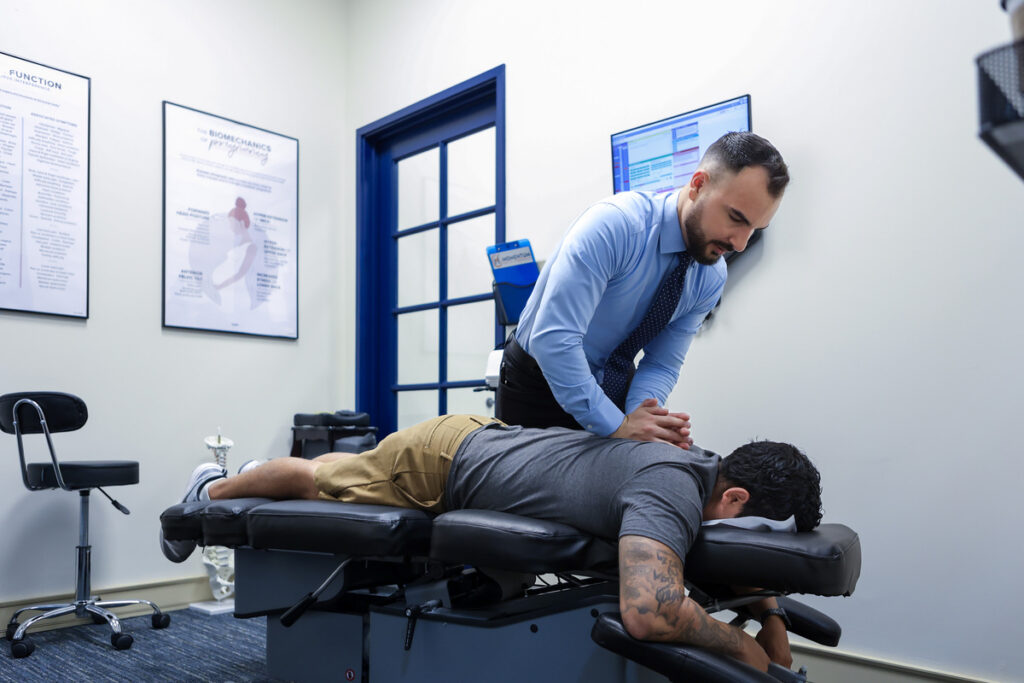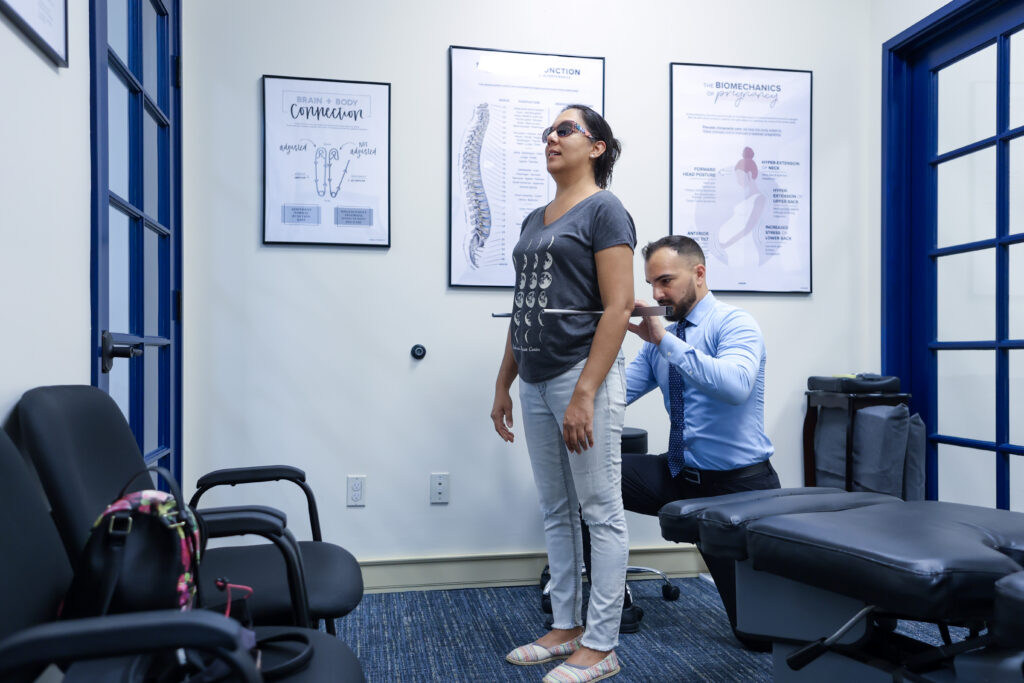

As a local chiropractor, I've seen firsthand how poor posture can significantly impact your comfort and productivity at work. It's essential to create a supportive environment for your body, but simply adjusting your chair or monitor might not be enough. There are specific strategies you can adopt to enhance your posture during your workday. By concentrating on a few key habits, you can alleviate discomfort and boost your overall well-being. Are you interested in learning about these strategies? Let's delve into five practical tips that can lead to noticeable improvements in your daily routine.
Adjust Your Workspace
As a chiropractor, I often emphasize the importance of your workspace setup for maintaining optimal posture and overall spinal health. The way you arrange your desk can greatly influence how you position yourself throughout the day, potentially preventing discomfort and pain.
Start by ensuring your monitor is positioned at eye level and about an arm's length away. This alignment helps you avoid leaning forward or straining your neck, which can lead to chronic discomfort over time. Keeping your screen at the right height encourages a more natural head position, supporting the health of your spine.
Next, focus on your chair. It should provide adequate support for your lower back. If your chair lacks lumbar support, I recommend adding a cushion or even a rolled towel to help maintain the natural curve of your spine. Your feet should rest flat on the floor or on a footrest, and your knees should be at hip level or slightly lower. This alignment is crucial for distributing your weight evenly, minimizing strain on your back and legs.
Additionally, it's important to keep frequently used items, like your keyboard and mouse, close to your body. This will help you avoid overreaching, which can lead to shoulder and wrist problems. If you find yourself stretching too far for anything, it's a clear sign that your workspace needs reorganization.
Lastly, consider the lighting in your workspace. Position your desk to minimize glare on your computer screen, as squinting can create tension in your shoulders and neck. A well-lit area not only helps you stay alert but also contributes to a better work experience overall.
Practice Ergonomic Sitting
As a local chiropractor, I want to emphasize the importance of practicing ergonomic sitting for your overall comfort and long-term health. Many people aren't aware that the way you sit at your desk can significantly impact your body and well-being throughout the day.
Let's start with your chair. It's vital that your chair provides adequate support for your lower back. This support encourages proper spinal alignment, which can help prevent discomfort and chronic issues. Ensure that your feet rest flat on the floor; if they don't reach, a footrest can be a simple solution to maintain a comfortable leg position.
Next, consider the height of your computer monitor. Adjust it so that it's at eye level. This simple change can alleviate neck strain, as it prevents you from having to tilt your head up or down. Ideally, your screen should be about an arm's length away, allowing you to view it comfortably without leaning forward, which can lead to tension in your back and neck.
Pay attention to how you position your arms as well. Keep them relaxed and close to your body, with your elbows at a 90-degree angle. It's important to keep your wrists straight while typing, and using a wrist rest can help maintain this neutral position, reducing the risk of repetitive strain injuries.
Remember, taking breaks is just as crucial as your sitting posture. I recommend standing up and stretching every hour. This practice not only relieves tension but also helps reset your posture and encourages healthy blood circulation.
Finally, be mindful of your sitting habits. Aim to sit back in your chair to maintain proper alignment rather than slumping forward. If needed, a supportive cushion can enhance your comfort.
Strengthen Core Muscles
As a chiropractor, I want to emphasize that maintaining good posture and overall health at work goes beyond sitting in an ergonomic position. A crucial aspect of supporting your spine and enhancing your posture is strengthening your core muscles. A strong core acts as a stabilizer for your body, enabling you to sit up straight and significantly reducing the strain on your back.
To begin fortifying your core, I recommend incorporating core-strengthening exercises into your daily routine. Simple yet effective exercises such as planks, bridges, and abdominal crunches can be performed without any special equipment. Aim to complete a few sets of these exercises several times a week. You don't need to devote hours at the gym; even short, focused workouts can lead to substantial improvements in your core strength.
Additionally, you can engage your core even while you're at your desk. Practice sitting up straight and gently pulling your belly button toward your spine. This straightforward action activates your core muscles and helps keep your posture aligned.
Another effective strategy is to replace your chair with a stability ball. This not only encourages you to engage your core while sitting but also promotes better posture and balance.
Take Regular Breaks
As your local chiropractor, I want to emphasize the importance of regularly taking breaks during your workday. It's crucial for maintaining good posture and overall health. Many of you may not realize that sitting for extended periods can lead to muscle tension and fatigue, which can adversely affect your posture.
By stepping away from your workstation, you give your body a chance to reset and alleviate the stress placed on your muscles and joints. I recommend setting a timer or scheduling breaks every hour. Use this time wisely to stand up, stretch, or take a short walk.
Even just a few minutes of movement can have a significant positive impact. Stretching areas like your neck, shoulders, and back can help release tension and boost circulation. Additionally, incorporating light physical activity, such as a brief walk, can get your blood flowing, enhancing your focus and productivity when you return to your tasks.
Changing your environment during breaks can also be beneficial. If possible, step outside for some fresh air or relocate to a different area of your office. A new scenery can refresh your mind and provide your body with a break from the same posture you've been in for hours.
Be Mindful of Movement
As a local chiropractor, I want to emphasize the importance of being mindful of your movement throughout the day. It may surprise you to learn how significantly your daily activities—like typing or reaching for a file—can influence your posture and overall health. Awareness of your movements is essential, as they directly affect how your body feels and functions.
Let's start with your workstation. Take a moment to assess your chair, desk, and computer screen. Adjust them to ensure everything is at a comfortable height for you. When seated, make sure your feet are flat on the floor and your back is supported by your chair. This proper positioning is vital for maintaining spinal health and promoting good posture.
As you work, regularly check in with your body. If you notice yourself slumping or leaning forward, it's a clear signal to realign and correct your posture.
Incorporating movement into your routine is equally important. I encourage you to stand and stretch at least once an hour. Walking around the office—even if it's just to refill your water bottle—can help counteract the negative effects of prolonged sitting and further enhance your posture.
When you walk, focus on engaging your core and keeping your shoulders back. This not only improves your posture but also boosts your confidence and energy levels. Additionally, it's essential to practice safe lifting techniques. Always bend at your knees, not at your waist, to avoid unnecessary strain and maintain proper alignment.
Conclusion
As a local chiropractor, I want to share some essential tips for improving your posture at work, which can greatly enhance your overall well-being. By making simple adjustments to your workspace and adopting ergonomic sitting habits, you can lay a strong foundation for better posture. It's important to strengthen your core and take regular breaks; this keeps your body engaged and helps reduce strain on your muscles and joints.
Additionally, being mindful of your movements throughout the day is key. Staying aware of your alignment can have a significant impact on your posture and health. I encourage you to embrace these practices not only to improve your posture at work but also to support your body's natural healing processes. Remember, good posture is vital for your overall health, and I'm here to help guide you on this journey!